
Improvising
Seeing The World Through A Child's Eyes

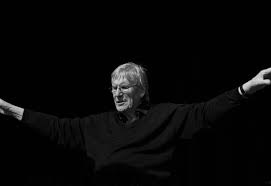
“Switch off the no-saying intellect and welcome the unconscious as a friend.”
~ Keith Johnstone
Impro is a book given to every new Palantir employee to read. It is intended to help them understand the company’s culture and navigate its social dynamics by explaining the principles of improvisation and status games.
Reclaiming Agency
I did not expect a book about theatre games to diagnose an entire civilization, but Keith Johnstone has a habit of revealing what others politely ignore. the starting point, in his book Impro, is not a stage, or even a rehearsal room, but a childhood recollection: “I could still remember the amazing intensity of the world I’d lived in as a child… I didn’t understand that clarity is in the mind.”
He believed dullness was an unavoidable consequence of time. Only later did he recognize it as something taught, an acquired condition rather than a developmental fate. That simple reversal, what if the problem isn’t aging, but training? Johnstone was an educator and here he is telling us school teaches us to be dull!
Johnstone’s life contained a recurring pattern. He gained competence, was praised for it, internalized expectations, and then lost the very capacity that earned attention in the first place. He describes it without sentiment or melodrama. The talent collapses. The writing dries up. The directing turns rigid. His conclusion is not clinical. It is blunt:
“The dullness was not an inevitable consequence of age, but of education.”
His assertion is not a slogan. It is a charge. We tend to treat schooling as a delivery system for ability. Johnstone treats it as a filtering machine that strips away abilities that threaten smooth administration. He writes,
“In a normal education everything is designed to suppress spontaneity.”
That explains more boardrooms, parliaments, research institutes, and social-media timelines than any sociology textbook I’ve read. Institutions do not merely demand competence. They demand predictability. And predictability never produces insight, only compliance.
Johnstone’s indictment is not abstract. It is personal, empirical, and occasionally grotesque. Take the teacher in the garden who plucks a flower for a troubled teenage girl and proudly insists, “this flower is especially beautiful.” The girl collapses, screaming “Can’t you see? Can’t you see!”
That moment, two people witnessing the same reality but inhabiting irreconcilable value systems, reads like a parable of modern expertise. The adult tries to help by narrowing the field of perception. The child, still capable of total attention, experiences the narrowing as violence.
Johnstone refuses to flatter adulthood. He treats it as a chronic injury. He catalogs its symptoms: forced posture, inhibited breath, intellectual vanity, a fear of failure so deep it disguises itself as discernment. He claims that his teachers didn’t protect his imagination. They amputated it.
“I’d left school with worse posture, and a worse voice, with worse movement and far less spontaneity than when I’d entered it.”
In another context, we would call that malpractice. In education, we call it rigor.
Creativity
His stories from the Battersea classroom should be required reading for every policymaker who insists children are apathetic. The so-called slow students come alive the moment their work no longer feels like evaluation.
“Ten minutes is the attention span of bored children… which is what they usually are in school.”
When offered freedom, not permissiveness, but actual agency, they write for hours, concentrate to spell words correctly, and demand more paper. Their supposed incapacity was never inherent. It was induced.
The most devastating moment arrives in art class. Johnstone and other aspiring educators dutifully follow instructions, producing smeared, labored canvases. Then the instructor spreads out versions of the same assignment, done by eight-year-olds. They were not just competent, they had been “done with such love and taste and care and sensitivity,” a reminder that the loss isn’t technical, but spiritual.
“Something happened to me in that moment from which I have never recovered.”
It is the intellectual equivalent of walking into a cathedral and discovering it was built by people who cannot yet reach the kitchen counter.
And so the dark laughter comes, not cruel, but unavoidable. We spend billions teaching children to think like adults, only to discover adults would produce better work if they thought like children.
Impro is not a manual for actors. It is a manual for citizens trapped inside their own self-protection. Its most subversive chapters are not about imagination or creativity, but about status, the invisible economy that shapes every conversation, meeting, marriage, rehearsal, and negotiation. Johnstone watches people speak and hears the unspoken arithmetic beneath them.
“Every inflection and movement implies a status, and… no action is due to chance.”
We think we are exchanging information. We are actually exchanging position.
Interpersonal
His example of the polite group discussing fainting spells still makes me wince. Everyone insists they are fine, helpful, sympathetic. What they are really doing is lowering someone else’s status, covertly asserting superiority, or preemptively defending turf. It’s ordinary speech as covert gamesmanship.
“No one could make an ‘innocuous’ remark without everyone instantly grasping what lay behind it.”
Most interpersonal conflict originates not in intention, but in unconscious status signaling, the See-saw Johnstone identifies, the constant unspoken “I go up and you go down.”
Facebook didn’t invent this dynamic. It simply automated it.
Johnstone forces a public rethink: what if the workplace meeting, the academic conference, the civil hearing, the family dinner, all of it, is theatre? And not Shakespearean theatre, but unedited improvisation performed by people terrified of looking foolish. No wonder innovation stalls. Everyone is too busy playing safe.
His diagnosis extends beyond performance. He describes discovering, to his horror, that “when I thought I was being friendly, I was actually being hostile!”
It’s an insight both humiliating and liberating. Most interpersonal conflict originates not in malice, but in reflexive positioning: verbal humility deployed as superiority, modesty weaponized into hierarchy. If therapy taught us to identify childhood wounds, Impro teaches us to identify conversational ones.
Johnstone’s answer to all this is not rebellion. It is permission.
He does not propose tearing down institutions or romanticizing instinct. He asks for something harder: the dismantling of internal censors.
“Switch off the no-saying intellect and welcome the unconscious as a friend.”
Of course that frightens the contemporary professional class more than any revolution. To switch off the no-saying intellect means risking embarrassment, losing composure, appearing unprepared, sins that modern meritocracy punishes far more severely than dishonesty or cruelty.
Trust
Improvisation, in Johnstone’s hands, is not about cleverness. It is about trust. Not admiration, not respect, trust. To improvise means trusting that meaning will emerge without advance planning. It means trusting that other people are not waiting to humiliate you. It means trusting that uncertainty is not a failure state.
And here is the terrifying irony: the more educated a person becomes, the less capable they often are of that trust. Because education now trains vigilance rather than curiosity. It rewards defensiveness, hedging, and pre-emptive critique. It breeds adults incapable of play.
Which brings me to the book’s funniest, bleakest, most accurate observation:
“I was trying to be clever in everything I did… In the end I was reluctant to attempt anything for fear of failure.”
Every university department contains such ghosts, people who know everything except how to begin.
Johnstone’s stories are funny until they turn tragic, and then funny again, because the alternative response would be despair. I laughed at the Divisional Officer who nearly failed Johnstone after discovering children “doing arithmetic with masks over their faces,” confronted by a cardboard tunnel he was expected to crawl through and an imaginary hole in the floor he refused to walk around. The comedy isn’t in the children, it’s in the adult terror of appearing ridiculous, the desperate clutching at authority when confronted with unregulated imagination. The laughter here is not mockery. It is recognition of how fragile our moral self-image truly is.
I laughed at the idea that adults need permission to imagine. But beneath the laughter sits a quieter grief: a culture terrified of unregulated life.
Potential
Impro becomes a wake up call, not about theatre, but about human possibility. It insists that imagination is not a luxury. It is a survival skill. A people trained to anticipate authority, avoid error, and distrust instinct cannot navigate uncertainty. They can only endure it.
And we live in a century defined by uncertainty: technological upheaval, ecological turbulence, epistemic exhaustion. Our institutions respond with more structure, more assessment, more control, exactly the forces that buried Johnstone’s early talent.
What if the real task ahead is not mastery, but unfreezing?
The older I get, the less interested I am in genius and the more interested I am in environments that permit the ordinary person to surprise themselves. Johnstone builds those environments, not through charisma or intimidation, but through a simple inversion of responsibility. When his students fail, he tells them, “you’re to blame me.”
It is funny, disarming, and, most important, liberating. They stop performing for approval and start acting from impulse. Fear evaporates. Spontaneity returns.
Because the alternative is not neutral, Johnstone reminds us that bad teachers are not merely ineffective, they are “wrecking talent,” whereas the good ones understand that
“the teacher’s skill lay in presenting experiences in such a way that the student was bound to succeed.”
Imagine if a government behaved like that. Or a corporation. Or a university.
Play
Imagine if our civic culture adopted Johnstone’s premise that intelligence is not the highest virtue, that children are not raw material to be corrected, that imagination is not a defect requiring discipline.
Impro teaches us that the opposite of chaos is not order. It is play. A society capable of play does not panic when norms shift. It adapts. It experiments. It listens. It forgives itself.
And maybe that is why this book matters, because our public language has grown hostile to uncertainty. We praise resilience but train fragility. We defend creativity while punishing deviation. We claim to value originality but reward imitation. Johnstone, with the clarity of a man who has lost and regained his imagination, says what nobody else wants to say: our systems are not failing accidentally. They are working exactly as designed.
Which means the next act will not be written in advance.
We will have to improvise.
Stay curious
Colin
To paraphrase, Thus sayeth the Raven, Never Bored! To encourage curiosity at every age is to keep learning in every setting, even while others are bored sitting. The curiosity of the mind should never be in harness. Live unbridled by a rigid mind and wonder as you wander always!
Thanks for the article that opens the door for fresh air! Stale is a state of mind, but to notice with imagination is exciting!
Oh Colin, it’s nearly year’s end and you’re tempting my book budget.
I’m just kidding, I don’t have a book budget :-)
I own two improv books, as I previously ran a public speaking class for teens, and improv was an essential part of it. Irony here is I hate improv, as I want to ponder before I speak. Improv scares one's mind forcing it to grasp at Anything to say, so as not to stand there embarrassed, wordless. No small wonder improv classes are few!
What if all of life is theatre? As you said, our lives are less akin to the eloquence in, “ As You Like It' where, “And all the men and women merely players;
They have their exits and their entrances;
And one man in his time plays many parts” but more akin to ”unedited improvisation performed by people afraid of being foolish”. Since we live that improv every day, you’d think we might be less wary of it.
When struck me most when I first read Shakespeare at twelve years old was the rest of that soliloquy:
“ His acts being seven ages.… a soldier…“Jealous in honour, sudden and quick in quarrel....Seeking the bubble reputation”… and shifts to “ His youthful hose, well sav’d, a world too wide, For his shrunk shank... until ends this strange eventful history,..into mere oblivion.. sans everything.”
See there "The bubble reputation"! My how Shakespeare revealed life to me, a serious quiet girl, who now understood it ends the same for all, no matter how learned one becomes. How then best to live, while one still has the moment to choose?
Just Imagine encouraging improv in fields or arenas where “the justice,
In fair round belly with good capon lin’d,
With eyes severe and beard of formal cut,
Full of wise saws and modern instances” lives by status games.
To some, it must feel like oblivion has come, to turn off the hard won intellectual status gain, especially when all of childhood’s erroneous teaching is that status is the purpose of adulthood; failure is not an option.
As for play, experiments and listening in education, as a private tutor, I grieve the fill in sheets sent home to complete after watching a Youtube video teaching basic science- at a high school level. When asked if their child needs more intensive tutoring to improve their grades, I rather forcefully suggest they allow their children exploratory play with scientific ideas, so they understand principles, and their interest in learning will re-spark. It’s so simple, like using multiple sized plates with a tailor’s tape implants what π means far more than memorizing a formula. Children are Not inherently bored, they are filled with curiosity, but every student I tutor says that school is so boring. Boring? This is a crime against their capable minds and imagination ! How can learning be boring, when there is exponentially new and vast knowledge unlearnable in multiple life times? Education, as in life itself, is a series of falling and rising, and so I seek to re-inspire my students’ imaginative curious drive by reminding them that while a life with failing ( first attempt at learning) can initially feel death defying, the self satisfaction of self-education is worthy of the deed.
Sadly, it is not only adults who need permission to imagine, for not only is our culture terrified of an unregulated life, it seeks more productivity, more optimization of humans, not unregulated imaginative improv.
Yes, oh yes, let’s imagine a civic culture where children are not raw material to be corrected, and that imagination is not a defect to be banished for mechanization. May we make of this recent turmoil ,this forced paradigm shift in education, an opening in the ways of improv so we may foster what humans were created to be.