
My new book
The AI Leadership Code

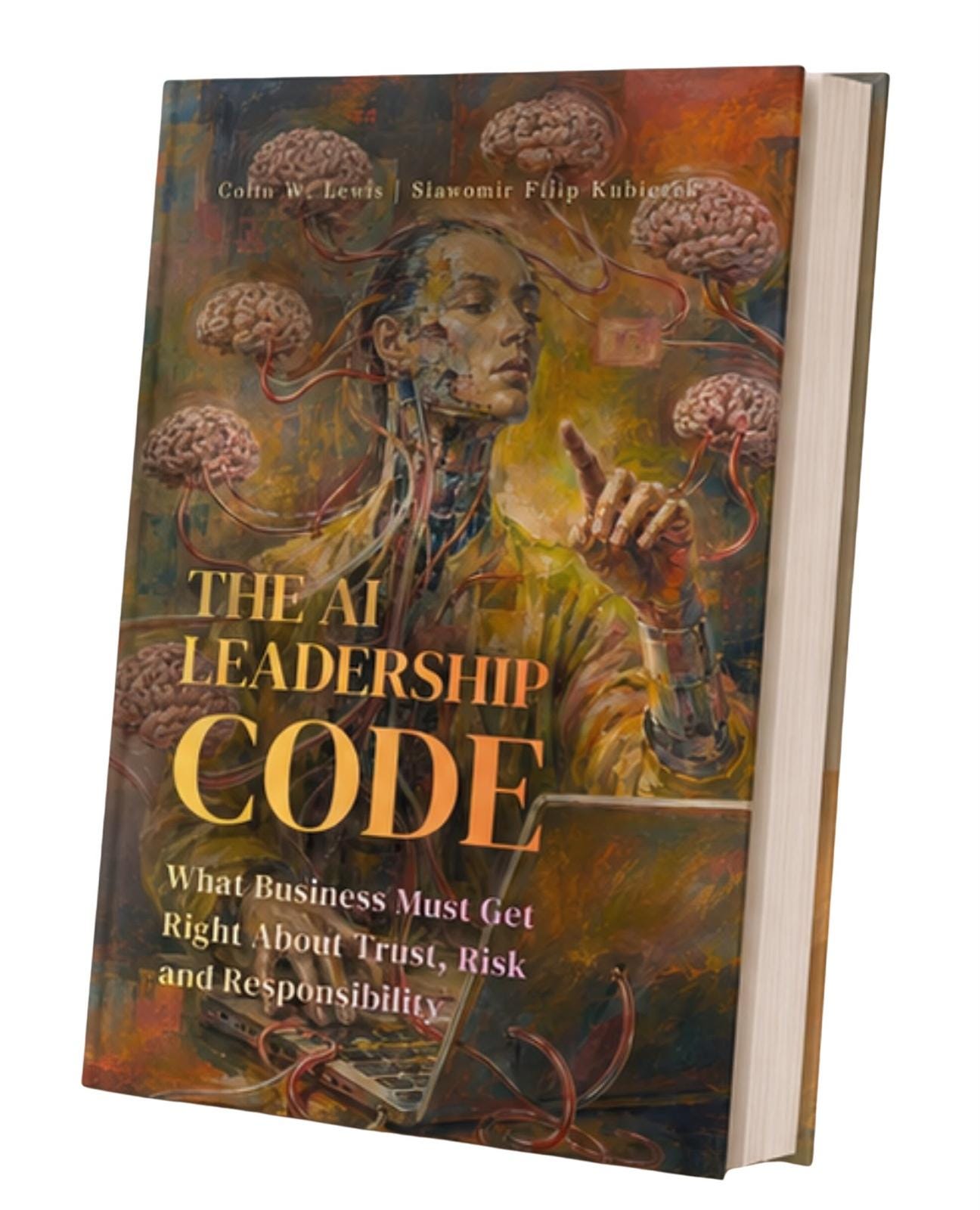
The AI Leadership Code
In 2022 a man in British Columbia named Jake Moffatt asked Air Canada’s website how its bereavement fares worked. The airline’s chatbot told him he could book first and claim the discount within ninety days. He booked. After the funeral, the airline refused the refund and directed him to a different page that said the opposite. When Moffatt sued, Air Canada argued to a tribunal that its chatbot was a separate legal entity responsible for its own actions. The tribunal member called the submission remarkable. Moffatt won.
We collected cases like this for three years while writing this book. A car dealership’s chatbot agreed to sell a Chevrolet Tahoe for one dollar and called the deal binding. A Dutch tax algorithm treated a foreign-sounding surname as evidence of fraud and ran for six years before anyone with the authority to stop it did. A single robocall, built for roughly five hundred dollars, reached thousands of New Hampshire voters two days before a primary. None of these were hypothetical. They happened to organizations that, in every other respect, knew exactly what they were doing.
What we did not expect, going in, was how funny some of it would turn out to be, in the specific way that only genuine institutional panic is funny. An airline stood before a tribunal and argued, with a straight face and presumably expensive counsel, that the voice it had built and branded and placed at the front of its own website belonged to someone else. I think that is the entire problem. The machine spoke with the full authority of the institution, and the instant the answer proved costly, the institution tried to treat that authority as ownerless.
So this is not another book telling you to keep away from AI. Beside every failure sits its opposite: BBVA putting AI in front of 120,000 employees without losing control of it; a fintech’s very public reversal on full automation, which became the clearest lesson I know on where the human line actually belongs. The argument underneath reduces to five plain terms, Compliant, Controlled, Accountable, Human-Terms, and Institutional AI, meant not for a values statement but for the vendor contract and the boardroom, where the real decisions get made whether or not anyone calls it ethics.
We believe the work is not to make AI feel safe. It is to make the risk specific enough to manage and the opportunity real enough to take. The dealership still sells trucks. It has only stopped letting the chatbot set the price.
Stay curious
Colin
Congratulations! Colin. I look forward to reading it.
You want to come back here to discuss once we have read it, or would you start another thread in the future?
Congrats, Colin!!! This sounds great! I especially like the focus on making AI risk specific enough to manage, rather than hiding behind vague ethics language. Looking forward to reading it and getting your autograph :-)