
NATO's Cognitive Warfare
How NATO's Cognitive Warfare Doctrine Reclassifies the Civilian Mind

Part of my series on Cognitive Warfare.
NATO and the Pentagon have formally classified your attention as a theater of war. This is what that means.
In early 2026, NATO finalized a doctrine that does something radical: it reclassifies the civilian mind as primary terrain for attack. This is not a metaphor; it is an administrative shift. According to a research bulletin from the Finnish Defence Research Agency (FDRA), more than twenty countries have now moved to treat the human brain as both the “target and the weapon” in a fight for cognitive superiority. The bulletin notes that technological development, global interconnection, and social media have made it possible to influence attitudes, decision making, and behavior at scale.
These operations target memory, attention, perception, and emotion, not the flow of information, but the conditions under which information is processed. They are designed to occur below the threshold of armed conflict, disrupting cohesion without a shot fired.
In late March 2026, the United States Strategic Capabilities Office began a program described as cognitive warfare. Public reporting indicates that the initiative is designed for continuous competition, not episodic conflict, and aims to operate at the speed and persistence of digital systems. Officials describe a competition over influence rather than territory, where the human brain is treated as a primary theater of operations alongside land, sea, and air.
Not Propaganda
I think the first mistake is to treat this as an extension of propaganda. Propaganda assumes a sender, a message, and a receiver. It assumes a surface. What these documents describe is an attempt to operate below that surface, to alter the conditions under which a message is even recognized as a message. The Finnish bulletin is explicit that the aim is not simply to control information, but to control “how the target population reacts to presented information.”
During the twentieth century, states competed over territory, resources, and occasionally ideology. Even psychological operations retained a sense of boundary. They were aimed at soldiers, or at populations in wartime, or at clearly identified adversaries. The current doctrine removes that boundary. It defines the civilian mind as the primary terrain. The target set is no longer a city or an army, but a pattern of attention distributed across millions, possibly billions, of individuals, continuously monitored and continuously adjusted.
This is why the language in these reports becomes strangely clinical. They speak of “cognitive processes,” “behavioral effects,” and “narrative saturation.” One paper describes flooding the information environment with emotionally charged content designed to blur the distinction between reality and fiction.
It is difficult not to notice that this description also functions as a description of the current media ecosystem. The weapon has already been built. What is new is the integration of artificial intelligence and large-scale data harvesting to detect fractures in society before they are visible, and to act on them before they stabilize into shared awareness.
Disorder
If the goal is to influence how populations interpret information, then success cannot be measured by agreement, but by responsiveness. A population that argues intensely may be functioning exactly as intended. Disorder becomes a signal of operational effectiveness. More precisely, epistemic fragmentation, the erosion of any shared baseline of reality, becomes the condition to be engineered. The metric of victory is not belief, but agitation.
The American program sharpens this further. When officials speak about shaping the “decision environment,” they are acknowledging that the most valuable outcome is not a specific decision, but a predictable pattern of decisions. The ambition is to narrow the range of possible responses until the outcome becomes statistically reliable. This is not persuasion. It is closer to conditioning, except that the subjects remain convinced of their autonomy.
The NATO concept reaches its most serious implication when it describes cognitive warfare as a “whole of society” problem. This is presented as a defensive necessity. If the entire population is a target, then the entire population must participate in defense. Education, media literacy, institutional trust, and social cohesion are no longer merely social virtues. They are classified, implicitly and sometimes explicitly, as national security assets. The distinction between civilian life and strategic function begins to dissolve.
Where the Boundary Collapses
Total war in the twentieth century required the mobilization of industry, labor, and culture. Cognitive warfare requires the mobilization of attention. It is less visible, but more intimate. The factory demanded your body. This system asks for your habits of thought, and it does so continuously, without pause, without the formal declaration that would signal the beginning or the end of conflict.
It is likely that the real difficulty is not technical, but philosophical. If the mind is treated as a domain of operations, then every belief becomes a potential vulnerability. Trust becomes a resource to be protected, but also something that can be manipulated. The Finnish report introduces a further complication. It notes that doctrine includes proactive actions to shape the information environment. This is where the boundary collapses. If defense requires shaping perception in advance, then the defender adopts the same operational posture as the adversary. The line does not disappear entirely, but it becomes contingent, argued, and unstable.
What does it mean to defend a mind without directing it? The documents do not answer this. They speak of resilience, but resilience to what, and defined by whom. They speak of superiority, but superiority over which alternatives. The language is precise about mechanisms and vague about ends.
Recognition And Defence
The documents speak of resilience without specifying its architecture. But architecture is precisely what is needed. The conventional answer, media literacy, is insufficient here because cognitive warfare does not primarily operate through false content. It operates through attention management, the quiet direction of what you notice, when you notice it, and how readily it triggers a reaction. What is needed is something one level up: the ability to recognize when your attention is being steered, not just to evaluate what you are being shown. This is a teachable skill, and it is distinct from anything currently offered in most curricula. Beyond the individual, certain institutions, courts, scientific bodies, electoral systems, function as shared reality checkpoints. They are targeted by cognitive operations precisely because they resist agitation and provide a common ground for adjudicating disagreement. Defending them is not the same as defending a particular belief. It is defending the infrastructure through which competing beliefs can be tested. The harder problem is that any defense doctrine risks mirroring the adversary’s posture, shaping perception in order to protect it. Medical ethics holds a structurally similar tension, since treatment also alters a person’s state, and it resolves that tension through three criteria: consent, transparency, and reversibility. A cognitive defense built around those principles would not dissolve the contradiction at the center of doctrine. But it would give the contradiction a shape, which is the precondition for holding it accountably rather than simply inhabiting it.
I do not think this is an oversight. It is a structural feature of the problem. Once the field of conflict is defined as cognition itself, the objective cannot be fully specified without presuming control over the very thing being defended. The introduction of neuroscientific data into planning intensifies this tension. NATO’s language of “cognitive superiority” deepens the problem. Superiority implies not just defense, but an edge: in perception, assessment, and decision. Protection implies restraint. To hold both at once is to accept a contradiction at the center of doctrine. A soldier is no longer only tasked with protecting bodies and territory, but with safeguarding patterns of thought within a civilian population while also outmatching an adversary in shaping those patterns. The duty expands inward. It becomes less about shielding people from harm and more about preserving the conditions under which they can think without interference, even as the system seeks an advantage in how thinking unfolds.
The whole-of-society response is not a slogan but an allocation of function. Trust, cohesion, education, and media literacy are organized as infrastructure. They are maintained, measured, and, when necessary, adjusted. Civilian life is drawn into the same ledger as logistics and readiness. The divide between social virtue and strategic asset is not argued away; it is filed under the same heading.
Persistence
There is also the question of persistence. If competition is continuous and conducted below the threshold of armed conflict, then there is no formal signal for when defense becomes overreach. The absence of a threshold removes the moment of decision that used to anchor law and accountability. The work continues at the desk, in the feed, in the ordinary sequence of reactions. No declaration, no armistice, no clear line to step back from.
Reading these reports, I picture not a battlefield but a room. Someone is sitting at a desk, scrolling through a stream of information, pausing, reacting, moving on. Nothing appears unusual. No alarms are triggered. No thresholds are crossed. And yet, somewhere in the aggregation of those small reactions, a pattern settles into place, steady and repeatable, like a signature that does not belong to the person who is writing it.
Stay curious (and alert)
Colin
Image: Bret Kavanaugh on Unsplash
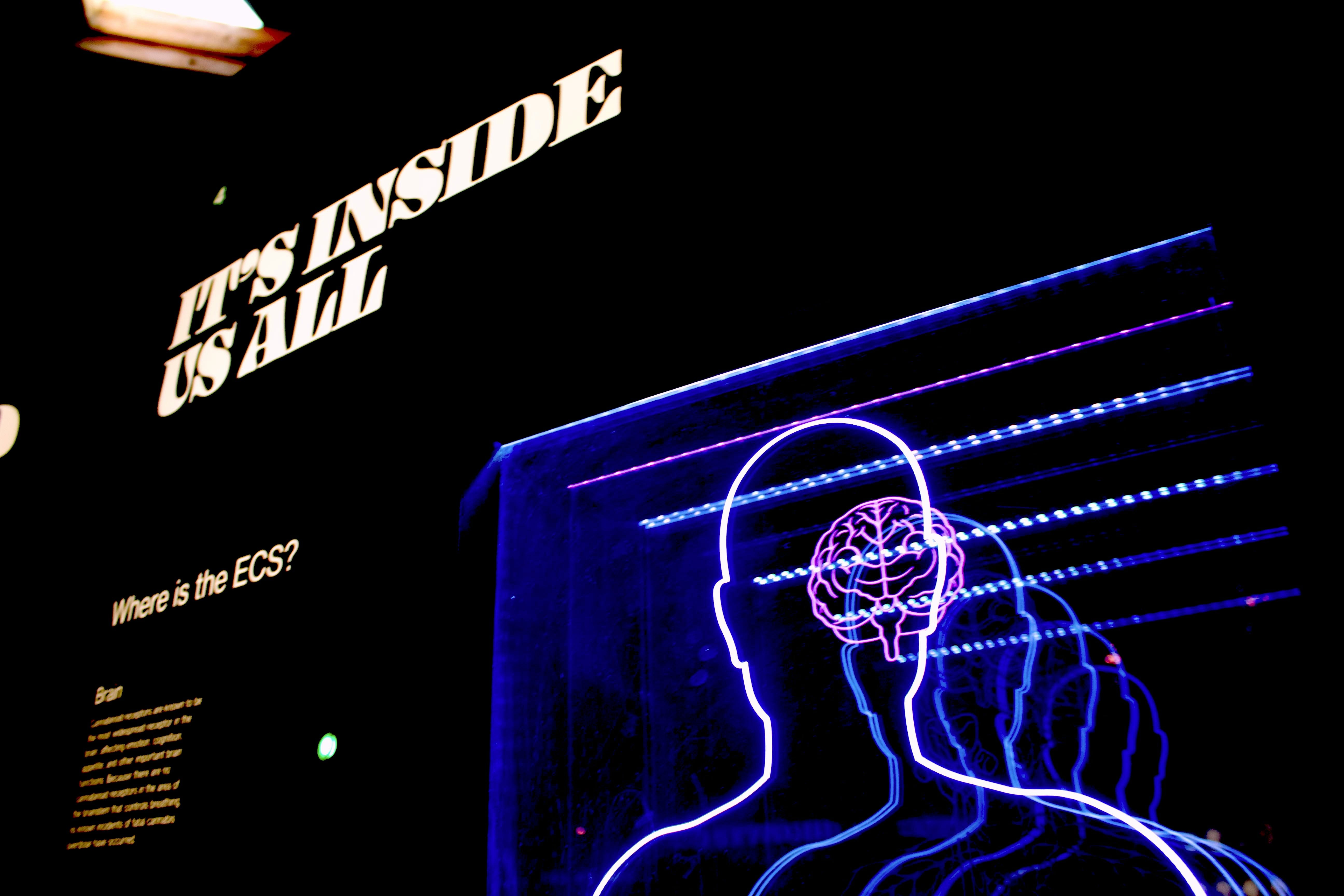
The ECS is a master regulatory system that functions in almost all areas of the brain that deal with movement, memory, emotion, and sensory processing
The mind is given a surfeit of ads to comply or deny actionable information and this attention to the mind’s eye is not surprising. It cannot be ignored and this focus on cognitive warfare is essential. The tidal waves of information coming so fast within international exchanges need signals of trust versus skepticism. Building belief is fragile and destroying belief is difficult to overcome with truth.
Do I look terrified? Okay, I'm terrified.
"They are designed to occur below the threshold of armed conflict..." Worse yet, they're designed to occur below the threshold of conscious awareness.
'The Finnish bulletin is explicit that the aim is not simply to control information, but to control “how the target population reacts to presented information.”' OMG, they're trying to program us!
"It is difficult not to notice that this description also functions as a description of the current media ecosystem. The weapon has already been built". Oh yes, Faux Newspeak, InYourFaceBook, 卐itter, etc.
"The ambition is to narrow the range of possible responses until the outcome becomes statistically reliable. This is not persuasion. It is closer to conditioning, except that the subjects remain convinced of their autonomy". This sounds like doublethink to me. "War is peace. Freedom is slavery. Ignorance is strength."
"If defense requires shaping perception in advance, then the defender adopts the same operational posture as the adversary". I was about to ask precisely this question, but upon reading further, I see you've already answered it.
I wonder if future historians will write about "The Paradox Wars".