
Persistence Over Talent
On the Slow, Steady Work of Becoming Human

“All of us are prisoners of our early indoctrinations, for it is hard, very nearly impossible, to shake off one's earliest training.”
Jabal, In Stranger in a Strange Land by Robert Heinlein
We are handed a set of simple rules for life, but experience teaches a more complicated truth. The truths that guide me are not found in maxims, but in paradoxes. What follows is a set of my reflections, each one shaped by the friction between convention and lived reality.
Stay The Course
Persistence defeats talent. When I was young, I did not quite believe it. Talent seemed like the raw material of destiny, the rare lightning strike that separated the gifted from the average. But over time, I learned that talent is an accelerant, not a guarantee. Persistence is the fuel. Talent gives you the head start, but persistence keeps you in the race long after the sprinters have collapsed from exhaustion or distraction, think hare and tortoise. And persistence, unlike talent, is universally available, though most people prefer the fantasy of genius over the grind of endurance.
This is not an argument against talent, it is an argument against the worship of talent. History is littered with the bones of prodigies who flamed out while the dogged plodder built the world. Edison’s dictum about genius being one percent inspiration and ninety-nine percent perspiration has been drained of meaning by repetition, but perhaps that is because its truth is too obvious to those who have lived long enough.
Talent is the lottery ticket; persistence is the compound interest. And persistence is not just about achievement, it is also the mechanism by which we manage our worries. By persisting in the process rather than fixating on the outcome, we redirect worry away from the impossible and toward the possible, as a gardener might direct water toward roots that can still grow.
Routines
Ugh, I dislike routines immensely, those fetishized structures of modern self-help literature. We are told that routines breed discipline, discipline breeds productivity, and productivity breeds meaning. Well as Charlie Chaplin said in The Great Dictator, we are not:
“Machine men, with machine minds and machine hearts.”
Routines are not universally liberating. For some, they are prisons. I spent years hunting for the “perfect routine,” only to realize that my productivity and happiness peaked not when my days were scripted, but when they were open to improvisation.
A routine is only as good as its compatibility with the temperament it governs. To some, routine is salvation; to others, it is suffocation. Sure, I have daily spiritual and exercise rituals, meditation, running, pilates, weights, cycling, swimming. But they are not at set times, and rarely follow the same route. The mistake is not in the routine, but in the universal prescription. And sometimes breaking free from routine is itself an act of persistence, a refusal to obey what does not suit the self.
Challenges
Mindfulness, too, resists uniformity. We are offered commercialized templates: meditation cushions, breathing apps, the silence of retreat centers. But I have found that mindfulness has as many forms as people who practice it. For me, challenge, struggle, is the deepest inducer of presence. The edge of difficulty, not the absence of it, is where the mind ceases to wander and fully inhabits the moment. What the Buddhist monk finds in the stillness of the temple, the mountaineer finds on the cliff face, the scientist in the intractable equation. Presence is plural. And like routines, mindfulness demands a certain rebellion against formula, a willingness to disobey the prescriptions that promise peace but deliver constraint.
The “approach-avoidance conflict” is a psychologist's term for one of our oldest dilemmas. We are wired to approach what we desire and to avoid what we fear. Yet life constantly requires us to invert this wiring. Sometimes you must approach when every fiber urges you to flee, a friend who needs comfort though you feel estranged, a responsibility you dread but must shoulder. Sometimes you must avoid when instinct drives you forward, an argument that tempts your pride but would ruin your peace, a person you long for but who would wound you. Rats cannot learn this inversion; humans can. Our humanity is not in the instinct but in the disobedience to instinct. And here again, persistence is the throughline: to persist in choosing the wiser path, even when instinct screams otherwise, is the essence of growth.
Falling Down
There is also the question of learning. Quantity versus quality is a false dichotomy; the order matters. In the beginning, quantity reigns. To learn, one must produce, attempt, fail, repeat. The student who agonizes over perfection at the outset paralyzes herself. Later, when competence emerges, quality becomes the aim, the refinement of a craft into mastery. The paradox is that one must waste effort at first in order to conserve it later. There is no shortcut through the swamp of repetition.
Persistence once more provides the bridge between the clumsy abundance of beginnings and the precise mastery of endings.
Theory, too, deserves its due. The impatience of our age asks every young mind: “How is this useful?” But that is the wrong question. The better question is: “What can become useful?” Theory is a time-release capsule. It expands the range of what might one day be applicable, often in ways unforeseeable at the moment of study. The future has a way of raiding the attic of abstract thought and finding tools no one realized were stored there. Theory enlarges the horizon of possibility, even if practice dominates the field of necessity. And persistence, through years of study, through abstraction before application, is what turns theory into power.
Credentials
I thought hard about this one and it is something I advise people in many walks of life, borne from experience. Industry does value the eMBA or Ph.D, despite the occasional sneer. The bias runs both ways: those who decry the irrelevance of doctorates are often over-represented because they speak loudest. The truth is more mundane: the market rewards the signal of persistence, the demonstrated ability to sustain a multi-year intellectual endeavor, and to complete it.
But it is less than important than reputation…
Reputation
Reputation is the quiet echo of persistence. It is never declared in an award ceremony, never embossed on a certificate, yet it accumulates all the same. Each time you endure, each time you follow through, each time you resist the easy exit, something invisible settles into place. Over years, these sediments form a bedrock that others can stand on, they call it trust, respect, reliability. But what it really is, beneath all those words, is persistence.
The paradox of reputation is that it is both fragile and durable. It takes years to build and a single lapse to crack, yet once it has truly settled, it can survive storms that would shatter mere credentials. A degree signals you could persist in the past; a reputation signals you can be trusted to persist in the future. One is proof of endurance, the other is a wager on it.
Reputation is the slow sediment of persistence, layered not in your memory but in the memory of others, and it hardens into something more lasting than talent’s brief flare or genius’s shock.
Talent, worry, routine, mindfulness, instinct, learning, theory, reputation, each of these domains is governed not by singular laws but by paradoxes. They are also united by a thread: persistence.
We persist not in order to win, but because persistence transforms us into the kind of beings who can endure. We worry not to eliminate fear, but to focus it on what matters. We routinize or refuse routine according to temperament, practice mindfulness in ways that defy orthodoxy, and master the art of disobeying our instincts when life demands it.
Perhaps the truest lesson across them all is this: what makes us human is not talent, wealth, or intellect, but the capacity to stay with difficulty until it becomes useful.
Stay curious
Colin
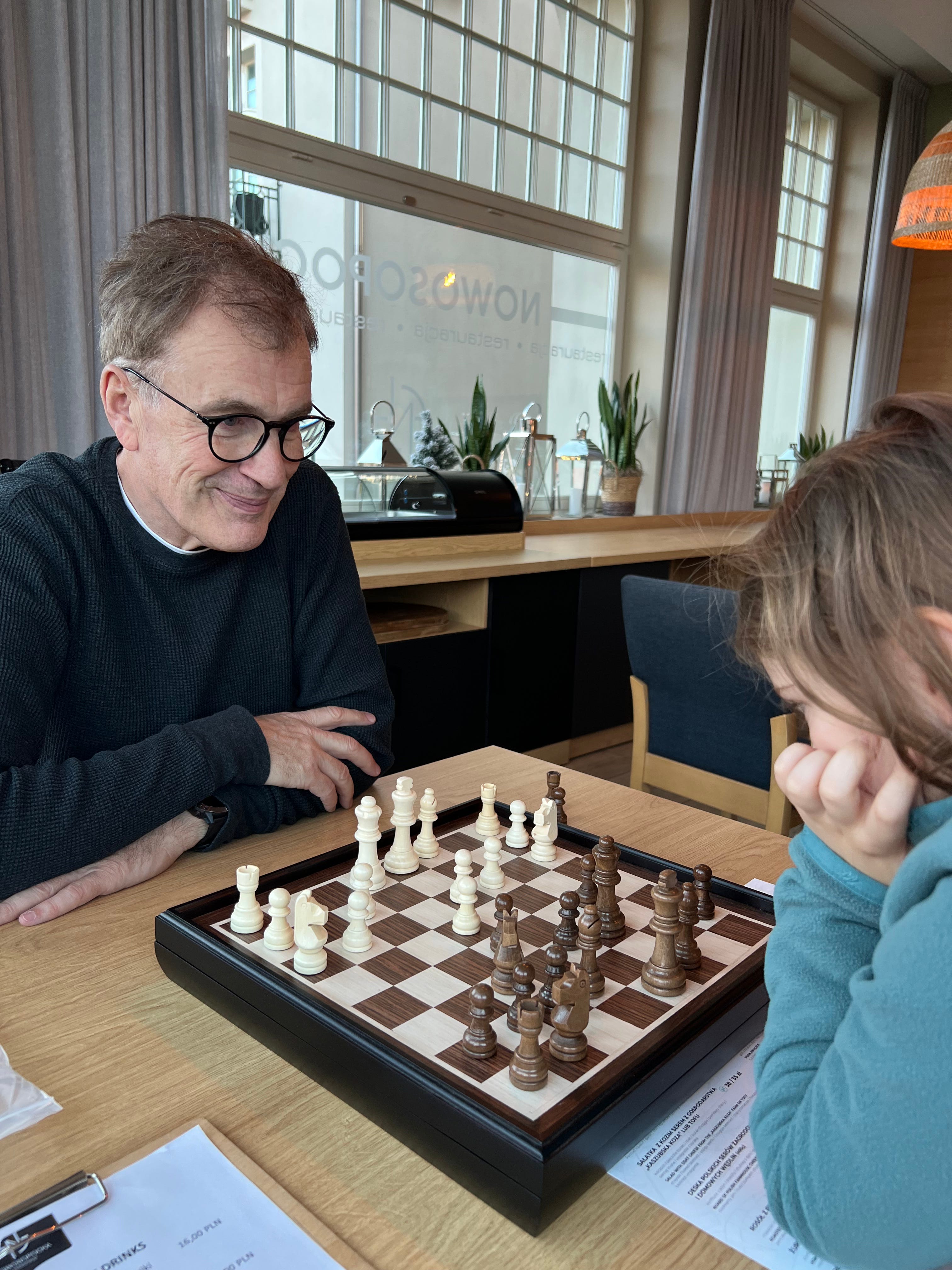
Image - me with my little rascal and one of our rituals.
Wonderful and well done post, Colin.
Heinlein's books were a favourite in my mid-teens, and I was blessed to revisit them afresh when one of my little rascals read them in his teens. It is pure joy to re-experience a loved book with one’s children.
I think the longer one lives, the more we realize that life IS paradoxes, and navigating them is life. Through all experiences of navigating those paradoxes, we create our individuality.
“Talent is the lottery ticket; persistence is the compound interest” is an apt metaphor. Just as many lottery winners end up with little to show for that windfall, so too do those with talent often squander it. I’ve noted time and again it is those who leverage even their smallest bit of talent with an abundance of persistence who become most successful. When engaged with younger people, I ask them to focus on their potential, whatever that is, and stress that through persistently reaching for it with diligence and full effort, it will take them beyond even their own expectations.
I’ve always disliked routines, except morning meditation, and while discipline to one’s aspirations is essential, how to achieve that is individual. We are not , “Machine men, with machine minds and machine hearts”, and finding our own flow is what makes the difference in both success, and personal contentment.
While concurrently feeling the burden of challenges, I do not feel vibrantly alive without them. Alas, there is no shortcut to push through the challenges in learning, even though the swamp of repetition can be rather boring!
Your metaphor on theory as a time- released capsule is brilliant, and becomes more evident later in life. It does indeed “expand in ways unforeseeable at the moment of study”. I like your phrasing here, that “the future has a way of raiding the attic of abstract thought and finding tools no one realized were stored there.” It is one reason that the gathering of knowledge is essential early in life and remains necessary. In time, one’s attic is packed with retrievable thoughts, concepts and experiences unique to an individual's life. As more gathers, we are able to intersect them in unforeseen ways, although, occasionally our attic requires decluttering, and a few discards;).
Persistence is a character quality that supports our navigation of living well through a human life splashed with paradoxes; persistence is foundational to them all. Cultivating and supporting persistence is thus foundational to education and parenting.
So, how often does your little rascal checkmate you?
I love this apocryphal quote from Descartes: "You just keep pushing. You just keep pushing. I made every mistake that could be made. But I just kept pushing."