
Seeking Clarity
Clarity is a way of showing one’s work, and one’s weaknesses.

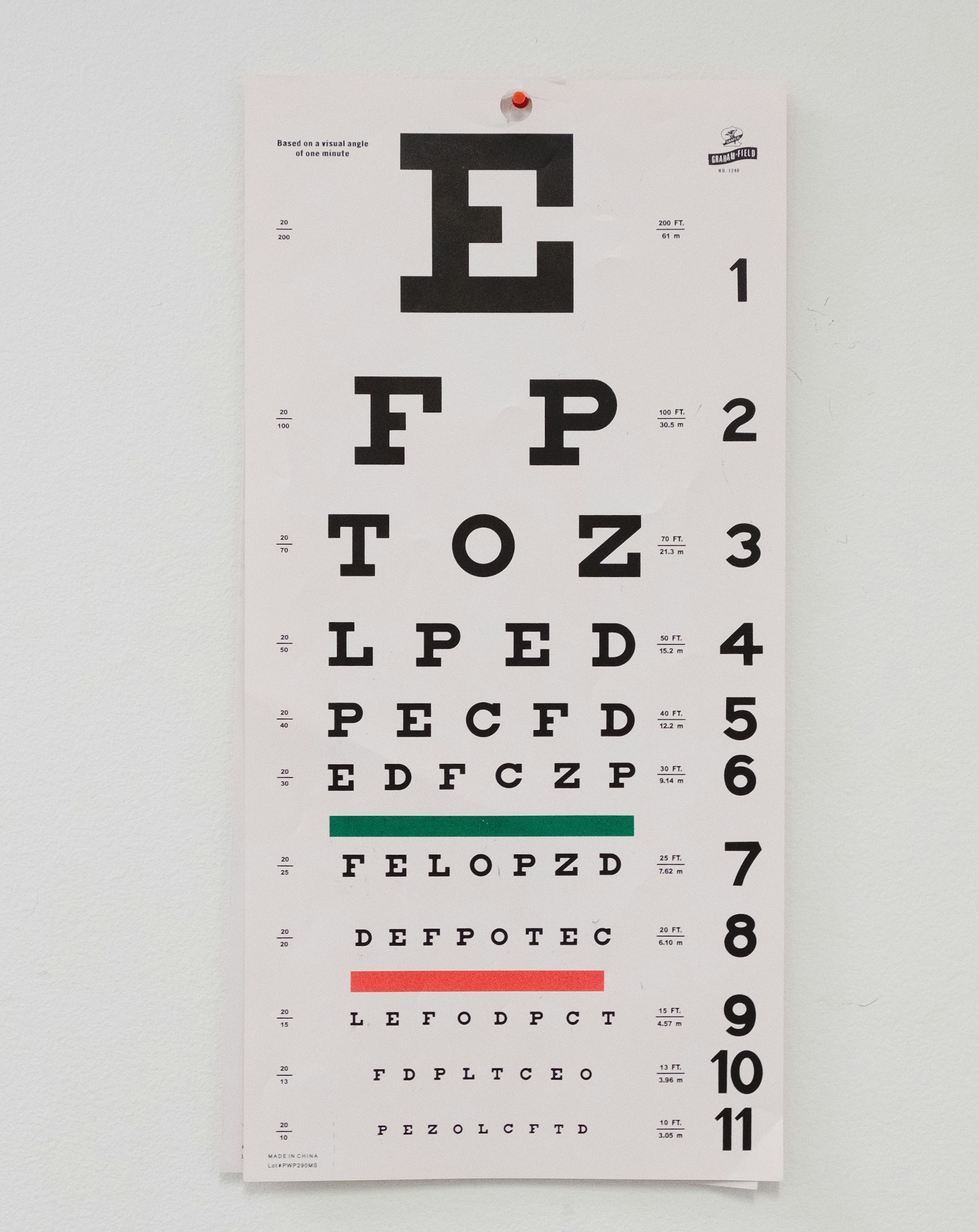
Clarity is not a matter of style; it is a matter of respect for the reader's time.
I have been sitting with Hollis Robins post on Unknown Unknowns for the last two weeks or so. A friend at a Big 4 accounting firm always tells me the partners don’t know what they don’t know. Is it because they are unable to clearly express themselves?
Recently a graduate student handed me a draft so dense that I felt I needed a Sherpa to reach the thesis statement. The sentences were long, festooned with subordinate clauses, and heavy with theoretical vocabulary. When I asked her what she meant in one crucial paragraph, she paused and said, “Well, it’s complicated.” So who was at fault? The student or the teacher?
It is complicated. The world is complicated. The genome is complicated. The bond market is complicated. But I have learned that the sentence “it’s complicated” often functions as insecurity. Complexity is real. Obscurity is optional.
George Orwell wrote in “Politics and the English Language” that “the great enemy of clear language is insincerity.” I believe that is more radical than it first appears. Insincerity does not mean lying. It means writing words whose implications one has not fully faced. It means hiding from the consequences of one’s own claims. If I cannot say plainly what I believe, perhaps I do not yet believe it, (or is it believe it yet?)
So here is my thesis: Clarity is a way of showing one’s work, and one’s weaknesses.
This becomes evident the moment one leaves the meeting room and enters politics. Politicians do not merely suppress speech. They deform it. In 1984, Orwell’s Newspeak was not a joke about bureaucrats. It was a theory of domination. Reduce the available vocabulary and you reduce the available thoughts. If there is no word for “freedom,” the concept becomes harder to hold in the mind without strain. The state need not argue against liberty if it can make liberty linguistically awkward.
Think about Hannah Arendt’s account of Adolf Eichmann in Eichmann in Jerusalem. What unsettled her was not demonic brilliance but cliché. Eichmann spoke in stock phrases. He relied on bureaucratic formulas. He described deportations as “resettlements.” Arendt’s phrase “the banality of evil” has been abused into slogan, but her point was moral. When language ossifies into prefabricated chunks, judgment retreats. One stops seeing. One begins repeating.
Clarity demands that we resist prefabrication. And here is the paradox, and it troubles me. Life rewards opacity.
The more technical the vocabulary, the more it signals membership in a guild. I have watched business people learn to translate simple insights into polysyllabic dialect. It is as if they fear that if their work can be understood by their parents, it cannot be serious.
I am not innocent. I have written sentences that performed intelligence rather than conveyed it. There is a particular pleasure in crafting a paragraph so intricate that only the initiated can parse it. It feels like building a private club. The danger is that one begins to mistake difficulty for depth.
Richard Feynman once remarked (apparently), “If you can’t explain something in simple terms, you don’t understand it.” Physicists can afford that bluntness because equations do the heavy lifting. The rest of us have only words. But the principle holds. Simplicity is not the same as simplification. The former is achieved after mastery; the latter is achieved instead of it.
The stakes of this distinction are not academic. In public health crises, financial collapses, and wars, the ability to state plainly what is happening becomes a civic necessity. During the Cuban Missile Crisis, President John F. Kennedy was forced to translate satellite imagery and intelligence briefings into a sentence the nation could grasp: Soviet missiles are in Cuba. Simple… the clarity of that statement did not eliminate fear. It organized it.
Contrast this with the language preceding the 2003 invasion of Iraq. “Weapons of mass destruction” became a talismanic phrase, repeated until it acquired the solidity of fact. The phrase was clear. The evidence behind it was not. Here is the uncomfortable truth: clarity of expression does not guarantee clarity of thought. Propaganda often speaks in short sentences.
So I ask myself what kind of clarity we are defending.
I believe the answer lies in accountability. True clarity is not brevity alone. It is the willingness to specify claims, define terms, and expose assumptions. It is the discipline of asking, What would count as evidence against my position? It is the refusal to hide behind abstractions.
We live in an era obsessed with information. Data pours from our devices in torrents. Dashboards quantify our steps, our sleep, our spending. And yet our arguments grow foggier. We have more numbers than ever and less agreement about what they mean. It is as if we have built a cathedral of metrics and forgotten how to speak inside it without echo.
We invent artificial intelligence systems capable of composing symphonies, but we struggle to define what we mean by “truth” in meeting after meeting I have sat through panels where the phrase “epistemic framework” appeared eight times and the word “fact” not once. One begins to suspect that obscurity is the last refuge of the undecided.
Clarity for me is a form of courage. To write clearly is to risk being wrong in public. It is to forgo the protective haze of jargon. It is to let one’s ideas stand alone, no theatrics.
There is also a democratic argument. If public reasoning is conducted in language inaccessible to the public, then democracy becomes theater. The Founders of the American republic argued fiercely, but they did so in pamphlets and essays that artisans could read. The Federalist Papers (we Europeans have no idea about them) are not light reading, but they are intelligible. James Madison did not hide behind impenetrable terminology. He was clear.
I think often of students who tell me they “don’t get” a particular text. Sometimes the failure is theirs. Often it is the author’s. We have canonized opacity in certain fields as if obscurity were a sacrament. But if knowledge cannot travel beyond a small circle, it withers (an obscure word). The test of an idea is not whether it survives peer review alone, but whether it can be stated in language that risks misunderstanding because it dares to be plain.
There is foreboding in this reflection. The technologies that now mediate our speech reward velocity over precision. Tweets outrun thought. Headlines compress complexity into slogans. Algorithms amplify outrage because it is legible. In such an environment, clarity can mutate into oversimplification at breathtaking speed. The demand for instant comprehensibility can flatten argument into caricature.
So we stand between two distortions. On one side, the fog of needless complexity. On the other, the glare of reductive certainty. The virtue of clarity lies in resisting this nonsense.
My position is simple… clarity is less about style than about integrity. It requires that I know what I am saying and why. It requires that I state it in terms my sharpest critic can understand, even if that critic disagrees. It requires that I revise until the sentence carries exactly the weight I intend, no more and no less.
The great irony is that this discipline, which sounds austere, produces a peculiar freedom. When I succeed in writing clearly, I feel lighter. The argument stands outside me. It can be tested, attacked, improved. I am no longer hiding in it.
Clarity does not guarantee wisdom. It does not prevent error. But it forces error into the open, where it can be corrected. In that sense, it is allied with truth not because it possesses it, but because it refuses to obscure its absence.
I began by thinking clarity was about prose. I now believe it is about responsibility. In a culture saturated with words, the decision to use them plainly is not trivial. It is an ethical choice. It is a declaration that one is willing to be understood, and therefore to be judged.
Clarity is so rare. It removes the safety net. Without the fog of ‘it's complicated,’ all that's left is your idea, naked and ready to be judged for what it actually is.
Stay curious
Colin
Image by Wesley Tingey on Unsplash
Such straightforward depth and integrity of analysis.
In 2026, we need to make clarity our greatest capability so that we stop drowning in the noise. Writing is one of the most effective strategies to turning ambiguity into clear thinking.