
Skills or Degree in a Dumbed Down World?
Are Universities preparing students for work and life?

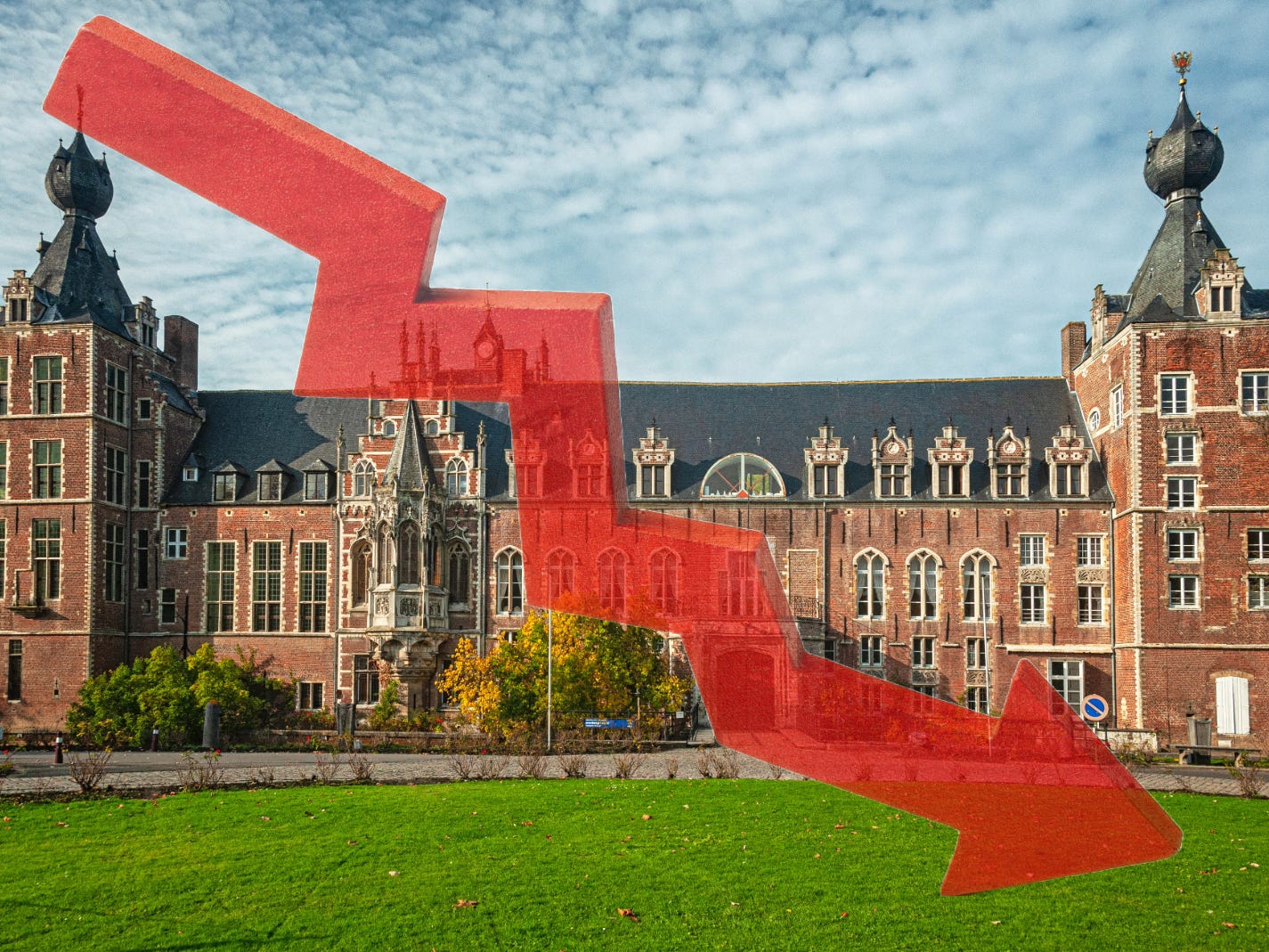
Proficiency on many skills and cognitive abilities among university-educated graduates decreased or stagnated in most countries. ~ OECD
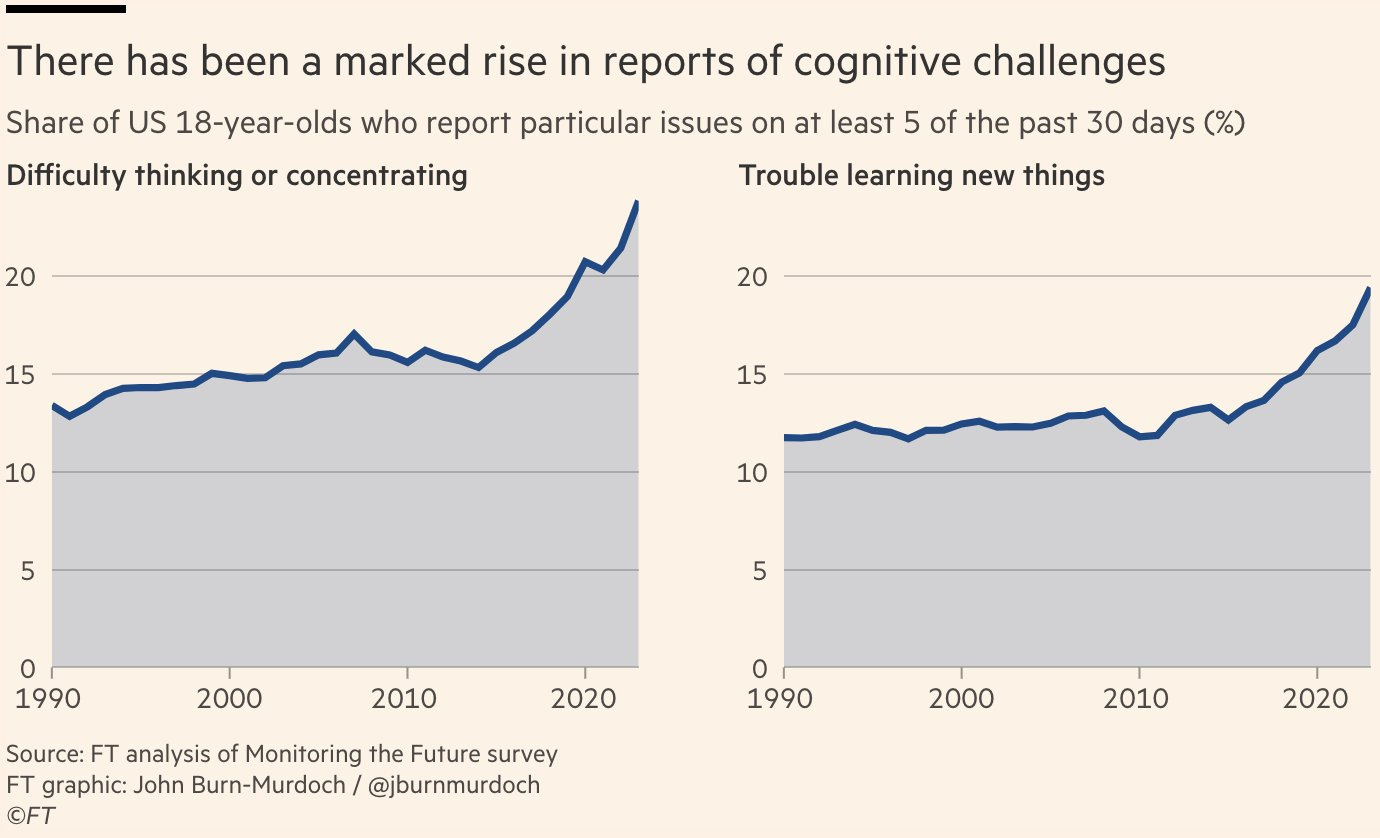
The Financial Times reports on what I have been concerned with and writing about for some time, there is a decline in cognitive abilities across society. From attention, to reasoning and literacy plus other essential life ‘skills’, there is a general dumbing down of society.
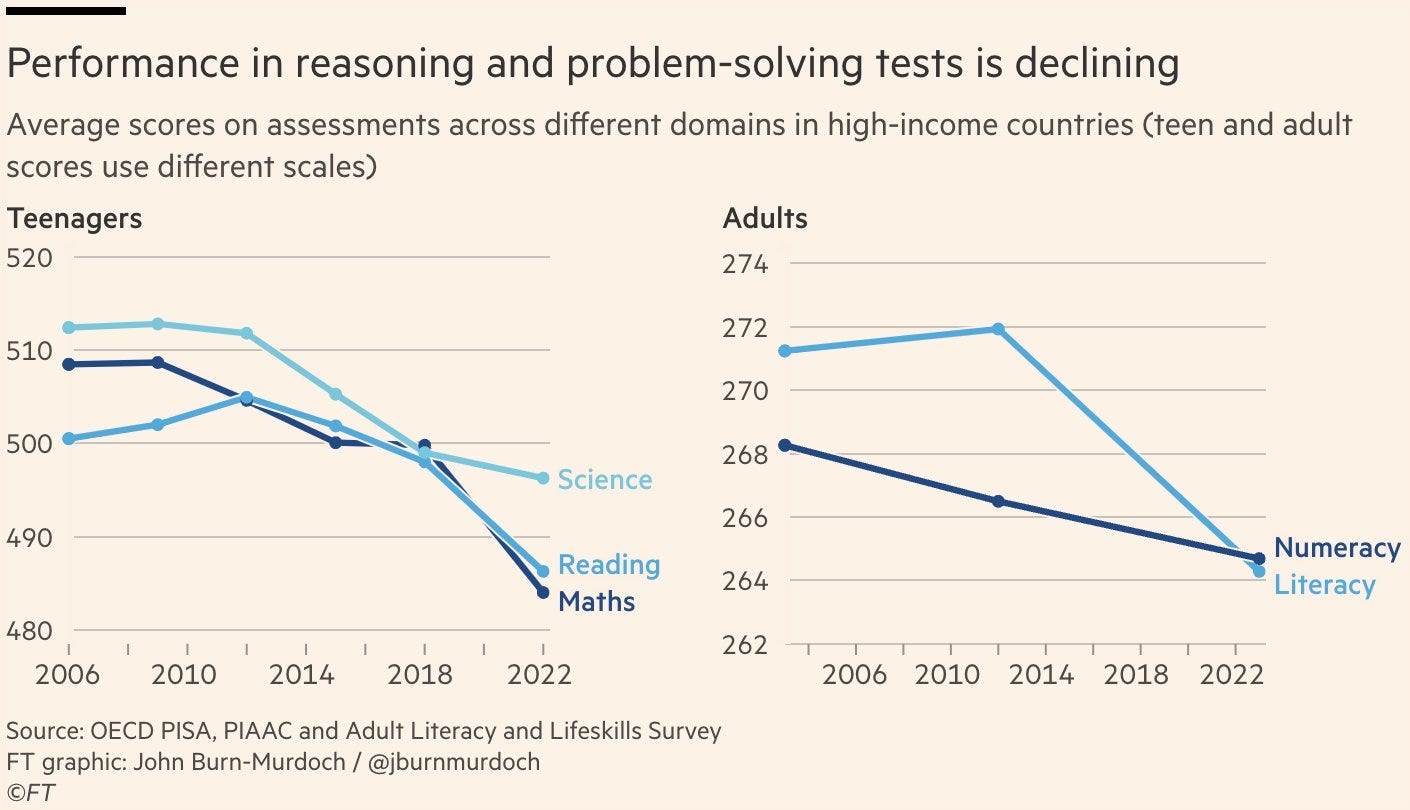
Concurrently with the rise in smartphone usage, questions have been raised asking, 'is Google making us stupid?' Furthermore, there has been a decline in traditional academic education, largely driven by employers increasingly valuing adaptable skills over static degrees.
Many unanswered questions remain regarding the decline in critical thinking abilities and general intelligence. This is society wide; there are also declines in key skills and mental attributes for those that have a university education. Perhaps universities were failing to adequately inspire critical thinking and equip students with the necessary workplace skills. Facing declining enrollment, universities now confront a stark imperative: evolve or risk significant downsizing.
A Rich Heritage
Dominus illuminatio mea. “The Lord is my light,” proclaims the University of Oxford, its ancient spires casting shadows rich with scholarly ambition and theological resonance. This motto, drawn from Psalm 27, provides more than mere spiritual comfort, it constitutes a provocation, subtly challenging us to reconsider what intellectual enlightenment means in a world dominated by reason and empiricism. Oxford's invocation is a paradoxical blend of tradition and spiritual audacity, reflecting the Enlightenment's enduring tension between faith and reason.
A little south of Oxford’s gothic beauty, is The London School of Economics and Political Science (LSE) which boldly proclaims “Rerum cognoscere causas,” to know the causes of things. This motto is more than intellectual bravado; it embodies the optimistic urgency of the late Victorian era, an era convinced that rigorous inquiry could diagnose and cure society's ills. Founded in 1895 by Fabians seeking tangible societal reform, LSE's motto reflects an earnest conviction that knowledge could, and indeed must, transform society.
Yet, this optimism now confronts skepticism, prompting reflection on whether academic idealism truly translates into meaningful, sustainable progress in the face of modern complexities.
Veritas
University mottos, far from being decorative relics, serve as both intellectual provocations and historical riddles. Latin, the lingua franca of ancient scholars and conquerors, grants these mottos a deceptive aura of universality and timelessness. Although, beneath their polished elegance lie vivid historical struggles and philosophical quandaries, challenging each generation to engage anew with perennial questions.
Look at Harvard’s starkly simple “Veritas,” truth. A seemingly straightforward concept, yet tantalizingly elusive. Whose truth does Harvard espouse, and by what criteria is this truth validated? In our current age, rife with competing narratives and “alternative facts,” this motto stands as an almost defiant commitment to objectivity, implicitly asserting that truth, however elusive, remains indispensable to intellectual integrity.
Two other Ivy League schools, Yale with “Lux et Veritas,” Light and Truth, and Princeton’s “Dei sub numine viget,” Under God’s power she flourishes, similarly invite us into a subtle exploration. Adopted in an era more comfortable with intertwining divine favor and institutional prosperity, Princeton’s motto today challenges our secular sensibilities, asking whether prosperity should truly be measured in endowments, accolades, and worldly prestige, or if its meaning lies elsewhere, beyond quantification.
Yet, beyond abstract contemplation, these mottos anchor deeply personal narratives.
Each student walking through Oxford’s Gothic arches or navigating LSE’s bustling corridors participates in a larger communal story, becoming part of a lineage of intellectual pilgrims whose lives have been shaped by these powerful inscriptions. For instance, the generations of scholars who left Oxford to challenge prevailing orthodoxies, from John Wycliffe’s religious defiance to J.R.R. Tolkien’s literary imagination, each driven by an internalized interpretation of their institution's guiding principle.
Dominus illuminatio mea. Rerum cognoscere causas. Veritas. Dei sub numine viget. These mottos, concise yet richly enigmatic, invite us into a perpetual and deeply human conversation, one continuously wrestling with the very essence of knowledge, its acquisition, and its place in an unpredictable world.
Imbalances
A significant contemporary challenge now confronts these venerable institutions, the diminishing relevance of formal educational qualifications in an evolving labour market. Recent analyses, from Oxford University, of nearly eleven million job postings in the UK from 2018 to 2024 reveal a pronounced shift towards skills-based hiring, particularly in fields such as Artificial Intelligence and sustainability. Employers increasingly question the value of traditional degrees, recognizing that these credentials may no longer adequately reflect practical capabilities or productivity. Instead, highly specific, practical skills have emerged as a superior currency, offering premiums comparable to or even surpassing traditional academic qualifications.
This new economic reality challenges universities profoundly. Can institutions long associated with timeless wisdom and structured curricula adapt swiftly enough to meet the demands of modern employment landscapes? Are traditional universities capable of fostering the nimbleness, innovation, and practical expertise that today's employers prize? These questions strike at the heart of the university’s future purpose and relevance.
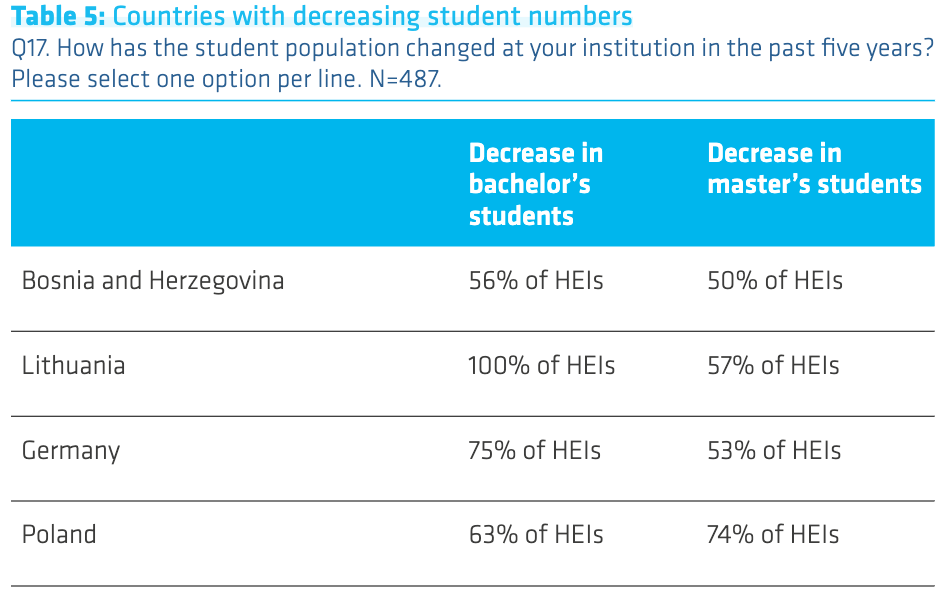
Many Central and Eastern European institutions project a continuing decline in their domestic student numbers, a trend that is confirmed by the 2024 Bologna Process Implementation Report. The University of Warsaw has seen a decline from 51,000 students in 2016 to 40,000 in 2024 (a fall of 21,5%), there are some demographic reasons, but many are related to less students choosing Masters studies. US enrolment over the same period is down 7%, whilst higher at Ivy League schools, those lower in the rankings have seen larger declines.
Alternative Thinking
Are universities teaching the right skills and boosting cognitive abilities? The evidence seems to show that they are not!
At a recent Rectors' meeting, I attended, the clear message was that many professors need to re-skill and up-skill. They must work closely with businesses to ensure their students are learning real world skills. In fact, it was suggested that some professors should work full-time in the marketplace for several years, especially in the management faculty.
For young people, they should foster an open mind, creative thinking and socio-emotional attitudes, and other traits such as resilience, flexibility, and agility, along with curiosity, some measured risk taking and lifelong learning.
I believe in the value of a degree and university education for many specific subjects, although I have doubts about a masters degree in, for example, ‘management.’ There are sub courses which are valuable to the business, e.g. chartered institute of accountants, specific finance domains, but as my HR colleagues tell me over and over again, what young people with a degree in management studies bring to the work environment is of little value, except maybe the diligence to work hard! I also think that universities need to put more emphasis on skills and teaching students to think.
Finally, I would advise young people to go long substance and short on status (a university degree as status is folly). By which I mean study those subjects that are substantive and valuable for the jobs you want, it is astonishing how many conversations I have had with first year students who have no idea what they want to do with their lives (the same applies to many students after 4/5 years of Masters studies).
Perhaps the greatest wisdom of the university motto’s lies in reminding us that genuine education is not static status preservation, but dynamic responsiveness, forever attuned to the shifting landscape of human endeavor.
Stay curious
Colin
In the EU, 18 countries saw a decline in student enrolments, with decreases ranging between 0.6% (Croatia) to 22.7% (Bosnia and Herzegovina). Steep decreases of more than 20% were also observed in Lithuania (21.6%), and Moldova (21.4%), followed by Armenia (18%), Ukraine (17%), Albania, Poland, Slovakia, and Bulgaria (more than 15%). North Macedonia, Czechia, and Estonia registered a decrease of more than 11%. Among the countries with the largest student populations in this group, Ukraine, and Poland registered decreases of more than 250 000 students (In Ukraine at least it is not surprising since 2022).
Additional charts from the Financial Times courtesy of the FT’s John Burn-Murdoch.
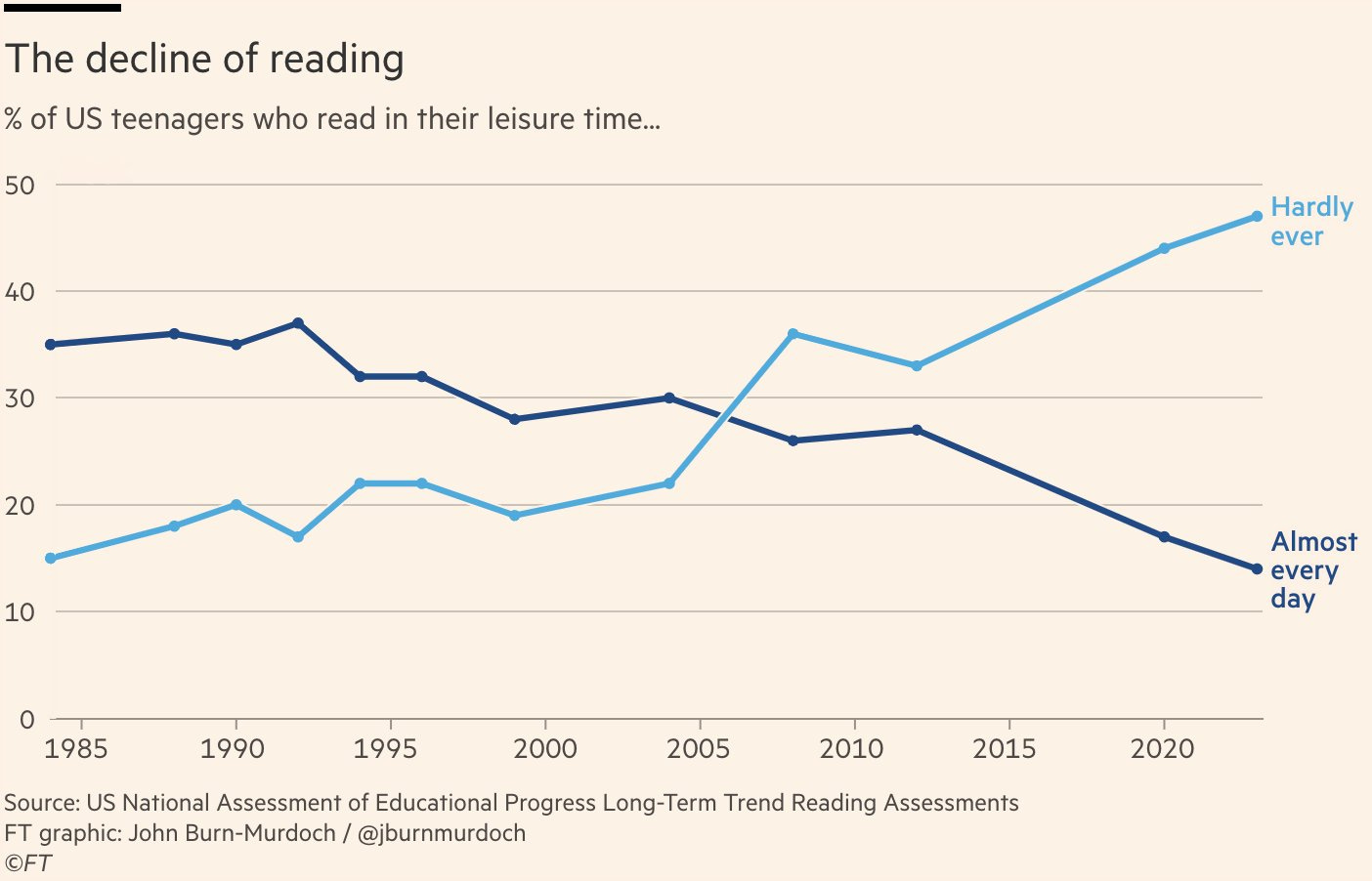
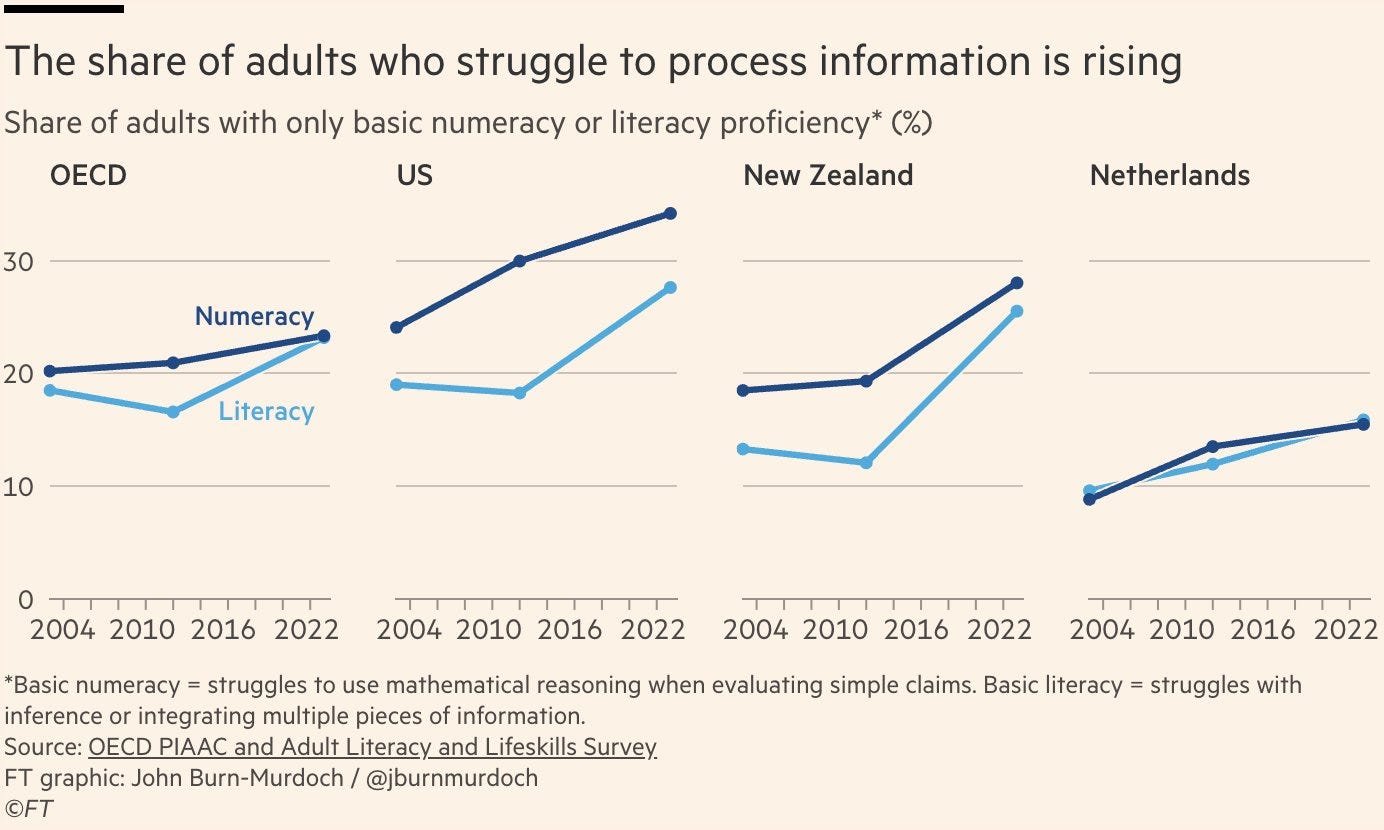
The disconnect between the demands of employers and university curricula isn't necessarily a coincidence.
Employers complain "we can't find anyone with the skills we need" when they really mean "we can't find anyone with the skills we need >willing to work for a song and dance<".
Just by way of example, as an experienced programmer seeking work, I've come across ads for an entry level programmer at barely more than the national minimum wage, much less the NY minimum where I live, with more skills than I have with my 12+ years of experience.
They demand "juniors" with senior level expertise. Aside from this, most other ads are looking for seniors with management experience.
Some demand a degree, indeed some demand a post grad, although those are usually associated with some kind of hardcore science or engineering.
Finally, the vast majority of ads aren't even coming from the employers themselves but from "recruiters". An added barrier layer to navigate through. The keyword there is "barrier".
Employers aren't desperate to hire at all. There's a lot more to all this, but I'm too tired right now to go through all the other angles involved in this game called "the job market".
Yes this is one of the most important conversations to be having in higher ed, outside AI. I am going to be following up on this post soon. https://hollisrobbinsanecdotal.substack.com/p/the-higher-ed-battle-ahead