
Trusting Our Own Minds
Becoming Aware of the Manipulation of Desire

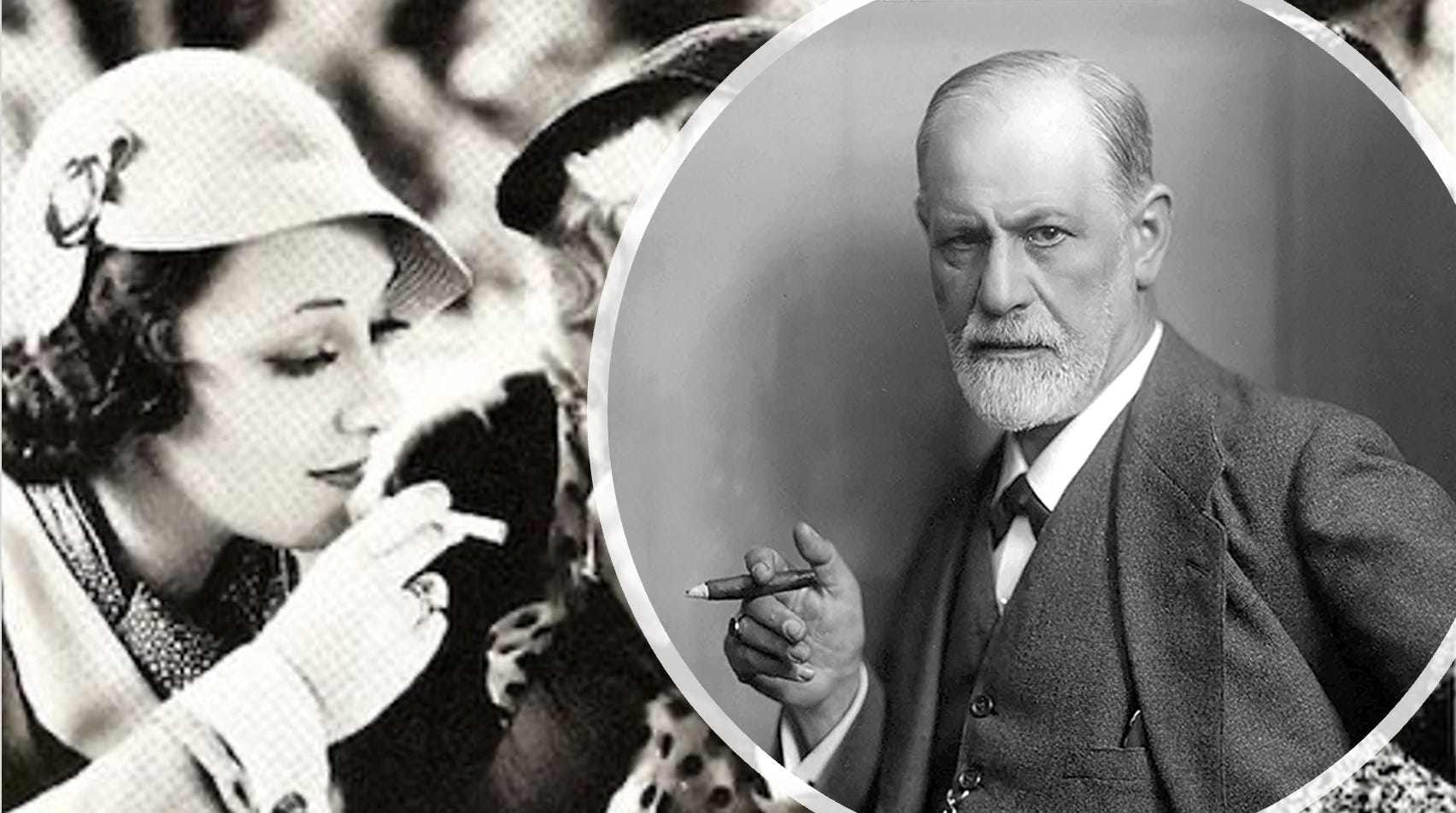
The goal is to “forge the mind of the nation into a unity of thinking, feeling, and desire.”
In the twentieth century, the story of democracy was subtly reengineered, but not where we would expect it to be. It was in fact in the private offices of psychoanalysts, bankers, press agents, and advertising executives. How this trajectory unfolded, the pattern of changing democracy into consumptionism is superbly crystallized by Adam Curtis in his documentary The Century of the Self, which reveals how the language of desire replaced the language of duty, and how the unconscious became the most lucrative political territory of all.
Strangely enough this re-engineering all started with cigars and cigarettes. Sigmund Freud, charting the hidden terrors of the mind, had seen humanity as a fragile edifice built atop volcanic drives, sexual, aggressive, irrational. His American nephew, Edward Bernays, took this diagnosis and turned it into a manual.
If Freud despaired at the primitive instincts beneath civilization, Bernays saw in them a commercial opportunity. His famous first stunt, the women debutantes lighting cigarettes, which he termed “torches of freedom” on Fifth Avenue, was not merely a triumph of public relations. Bernays consulted psychoanalysts, who told him cigarettes were a phallic symbol, a token of male sexual power. By framing women’s smoking as an act of defiance against patriarchy, he transformed cigarettes into a badge of liberation. The women in that Easter parade were not just smoking; they were claiming equality, wielding a phallic symbol against male dominance. What Freud had diagnosed as neurosis, Bernays marketed as emancipation.
Happiness Machines
Bernays’ ‘genius’ was to transform democracy into consumption. No longer was the citizen valued for judgment at the ballot box, but for appetite at the department store. In Curtis’ documentary a Wall Street banker put it plainly:
“We must shift America… from a needs to a desires culture. People must be trained to desire to want new things even before the old have been entirely consumed.”
Before Bernays, goods were advertised in functional terms, shoes for durability, cars for reliability, stockings for utility. After Bernays, products became canvases for identity. A car was not transport; it was potency. A cigarette was not tobacco; it was liberation. And democracy was reimagined as the satisfaction of restless, irrational wants. As President Hoover told a group of PR professionals and advertisers in 1928:
“You have taken over the job of creating desire,” he said, “and have transformed people into constantly moving happiness machines—machines which have become the key to economic progress.”
But lurking behind this orchestration was fear. Bernays’ very success highlighted the volatility of mass desire, and this unease gave intellectuals like Walter Lippmann their opening. Lippmann “argued that if human beings were in reality driven by unconscious irrational forces then it was necessary to rethink democracy” and that a new elite was needed to manage what he called “the bewildered herd.”
Engineering Consent
Bernays eagerly offered himself as their engineer. He called it the “engineering of consent,” which he described as the attempt
“to control the masses by satisfying people’s inner selfish desires which made them happy and thus docile.”
Consent was not deliberation; it was sedation. The people would be happy, and thus docile. What emerged was a chilling paradox: democracy would be preserved by treating citizens as children. As his own son later put it, Bernays believed the public had to be guided “from above” because they “very easily might vote for the wrong man or want the wrong thing.” The goal was to “develop new conduct based on satisfying instincts.”
Herd Mentality
The story darkened in Europe, where Joseph Goebbels read Freud and Bernays with predatory interest. The Nazi rallies were not spontaneous spectacles but carefully constructed psycho-dramas, designed, as the documentary narrator states, to:
“…forge the mind of the nation into a unity of thinking, feeling, and desire.”
Freud had warned that crowds surrender their libidinal energy to a leader while channeling aggression toward outsiders. Goebbels embraced this as a governing principle, inspired by the writings of Bernays. The result was not just frenzy and hate but a deliberate mobilization of unconscious forces: love for the Führer, hatred for the alien. Bernays had sold liberation with a cigarette; Goebbels sold domination with a ‘messiah’.
Across the Atlantic, Roosevelt charted a different path. His New Deal, bolstered by George Gallup’s scientific polling, suggested faith in the rational citizen. Gallup’s polls assumed people could state preferences without manipulation, that democracy was not doomed to be ruled by instinct alone. Roosevelt sought to forge a new connection between the masses and politicians, not as consumers of pleasure, but as sensible citizens capable of taking part in governing the country. This was a fragile counter-argument to Bernays’ vision, one rooted in explanation rather than seduction.
Awakening the Unconscious
Yet business would not yield. From the General Motors “Parade of Progress” to the utopian vistas of the 1939 World’s Fair, corporations fought back, tying capitalism to democracy with silken threads of spectacle. The public was invited not to deliberate, but to consume, each purchase a patriotic act. By mid-century, psychoanalysis had left the clinic and colonized the marketplace. Ernest Dichter and the “depth boys” plumbed the unconscious of the American housewife, discovering that Betty Crocker cake mix failed not because of taste, but because women felt guilty about the ease. In focus groups, housewives free-associated about baking and confessed a sense of shame in “cheating.” Dichter’s solution, add an egg, was a symbolic restoration of effort, a gift to the husband, a sacrament of participation. The product was redeemed, and sales soared. The unconscious had spoken, and the market listened.
The Freud’s
The irony, as Curtis’ documentary makes clear, is that the Freud family became enmeshed in this grand project. Anna Freud sought to strengthen the ego through conformity, molding children into well-adjusted citizens. Bernays manipulated the same terrain to manufacture docile consumers. Both assumed the same premise: that beneath the veneer of civility lay dangerous, chaotic drives that must never be fully trusted.
Anna Freud’s clinic and Bernays’s advertising office were parallel laboratories of control, one therapeutic, the other commercial, each intent on taming the self. Anna Freud, unlike her father, believed people could be taught to discipline their inner drives by conforming to social rules. Working with children, she argued that by strengthening the ego early on, society could be protected from the eruption of unconscious impulses. Her clinics promoted a therapeutic conformity, shaping children into well-adjusted citizens. This project reflected Bernays’ own, though directed at the self rather than the marketplace, both saw control of the inner self as the key to social stability. But who was in control?
The unconscious was the new frontier: first mapped by Freud, colonized for commerce by Bernays, harnessed for political unity by Goebbels, and regimented in therapy by Anna Freud. It was no longer a private depth of the mind but a territory in which power was exercised. The problem was that this re-engineering of democracy did not make people freer; it made them more dependent.
The consumerist self, driven by endless desires, became a stable engine for a mass-production economy. The freedom promised by advertising was an illusion: people had to conform even “to the new non-conformists.” The promise of endless self-expression created a constant need to buy new things to define who you are. Even rebellion, as with Wilhelm Reich’s liberation of feeling, was absorbed by business and sold back to the public as a new lifestyle.
The Algorithmic Mind
This century of the self is not just history, it is our present condition. The algorithmic feeds that govern modern life are Bernays’ dream made digital: endless torrents of micro-torches of freedom, each advertisement a little seduction, each click a minor absolution. The citizen is now fully eclipsed by the consumer. We do not deliberate; we scroll. And beneath it all is the same assumption Freud once whispered and Bernays once monetized: that we cannot be trusted with our own minds.
The question that lingers is whether democracy can survive in a world where the unconscious is endlessly mined, managed, and monetized. Roosevelt bet on explanation. Bernays bet on manipulation. Goebbels bet on frenzy. Our century has inherited all three: the consumerist seductions of Bernays, the rationalist promises of Roosevelt, and the collective passions Goebbels mastered that still flare in political movements. This is not merely a century of the self, it is a century in which the self has become the raw material of power. And we all are to one extent or another, who they made us to be.
Guarding against such manipulation requires vigilance: cultivating media and psychological literacy, questioning our desires before we act on them, reclaiming our role as citizens rather than consumers, and embracing discontent as a civic duty rather than fleeing into products. As Arthur Miller once observed,
“…suffering is not a mistake... the problem is not to undo suffering or to wipe it off the face of the Earth but to make it inform our lives.”
Ultimately it means actively working to create the person you want to be, rather than simply trying to uncover the person ‘they’ always wanted you to be.
Stay curious
Colin
The full quote by Arthur Miller:
‘My argument with so much of psychoanalysis, is the preconception that suffering is a mistake, or a sign of weakness, or a sign even of illness. When in fact, possibly the greatest truths we know, have come out of people’s suffering. The problem is not to undo suffering, or to wipe it off the face of the earth, but to make it inform our lives, instead of trying to “cure” ourselves of it constantly, and avoid it, and avoid anything but that lobotomized sense of what they call “happiness”. There’s too much of an attempt, it seems to me, to think in terms of controlling man, rather than freeing him – of defining him, rather than letting him go! It’s part of the whole ideology of this age, which is power-mad!’
The piece makes a strong case that we’ve drifted from being citizens to being consumers, shaped more by engineered desire than by reflection. The history matters. It shows this did not happen overnight. Psychology, advertising, and politics slowly merged and learned how to pull emotional levers.
What I would add is this: awareness alone is not enough. Knowing we are being influenced does not automatically restore independent thought. We also have built in blind spots like confirmation bias. We naturally look for evidence that supports what we already believe. That makes us easy to steer.
If we want to trust our own minds again, we have to train them. That means slowing down, seeking out views we disagree with, and testing our assumptions against reality. The real work is not just resisting manipulation. It is building habits of clear thinking. A society that can do that is much harder to control.
Strong historical arc here. Bernays’ pivot from duty to desire still echoes louder than most people realize. What strikes me now, though, is less the origin of the engineering and more the posture it produces.
At some point the question shifts from “How were we shaped?” to “What do we do with that knowledge?”
The machinery is real. Desire has been cultivated, redirected, monetized. But explanation alone doesn’t restore agency. It can even harden fatalism if we aren’t careful.
The more practical counterweight may not be intellectual resistance but behavioral interruption — reclaiming attention, altering rhythm, refusing reflex. The unconscious can be mined, but it can also be disciplined through posture and timing.
If democracy drifted from duty toward appetite, perhaps the quiet correction begins not in exposing the engineers, but in strengthening the citizen again — one deliberate act at a time.
Appreciate the reminder of the architecture. The next frontier may be the habits that undo it.