
China’s Unique Growth
Westerners should understand the Chinese economic miracle

Part 2 (part 1 is here) of a series of posts on the economic miracle of China and what we in the West can learn from China. I believe that we need better data-driven analysis from China, likewise we need to become more self-sufficient as countries, finally the West should adopt more cultural sensitivity toward China, which could be a pathway to a better relationship in the world. This is part 2, although a foundational post, setting the scene for a deeper look at the new generation of Chinese, the generation of Chinese born in the 1980s, the 1990s, and the first decade of the 2000s who mark a distinct break from the past, one of innovation instead of imitation.
China’s rise is reshaping the world order and reverberating through the global economy. To misunderstand China is to overlook an economic miracle. Beijing born, Harvard educated, and Professor of Economics at LSE, Keyu Jin cautions us: “China is evolving all the time and I think this is actually one of the key things that the West misses… don't read the (Western newspaper) headlines.” The facts are that China has transformed into a global powerhouse in just under 40 years, economic progress on a mesmerizing scale (China accounted for 19% of global GDP in 2023).
Many in the West remain fixated on outdated perceptions of China, its imports displacing western workers, an economy reliant on cheap imitations, a growth model driven by fossil fuel industries, an inflexible state overshadowing the private sector, and widespread corruption. Whereas the new China is focused on technological innovation, a cleaner environment (99% of taxi’s, in many major cites, are EV’s), greater food security, and a higher quality of life for its citizens.
For the last 20 years they have become the manufacturing factory of the world, the phone you are reading this on is probably Chinese made, your laptop is probably Chinese made, even the new electric car batteries, yes, those are Chinese too. As Tim Cook, CEO of Apple said (9 minutes 50 seconds), China is not cheaper, it has a ‘highly skilled workforce’ advanced tooling and knowhow.
To understand China’s ascent is to grapple with paradox. It is a nation where private entrepreneurship grows under the auspices of an interventionist state, and where market-driven innovation coexists with rigid political centralization. How does the state reconcile its desire for control with the need for innovation, which thrives on freedom and unpredictability? This tension manifests in policies that both enable private ventures to grow and constrain them under bureaucratic oversight, particularly in technology and finance. For instance, stringent data control laws and restrictions on capital flow limit private firms’ ability to expand globally, while the government’s emphasis on self-reliance has intensified regulatory oversight in tech sectors. Such constraints illustrate the state’s dual role as both enabler and limiter of innovation.
The Chinese model balances a dynamic tension between regional decentralization and overarching central government, creating a system that is both structured and improvisational, a paradox that lies at the heart of its economic transformation. It is a nation that defies neat categorizations. What emerges is a compelling hybrid, neither capitalism nor socialism but an enigmatic fusion that perplexes and fascinates in equal measure.
At the core of this economic puzzle lies the “China Model,” an approach that eschews ideological orthodoxy for pragmatic adaptability. Rooted in millennia of Confucian governance principles and shaped by the tumultuous 20th century, this model reflects China’s ability to harness historical lessons while responding dynamically to contemporary challenges. Confucianism’s emphasis on hierarchy and social harmony underpins the state’s role as a conductor of economic stability and development. This cultural foundation enables the state to act as a paternalistic yet strategic steward, balancing collective welfare with individual enterprise. Its foundations lie in a synthesis of collective values and meritocratic traditions, which have been recalibrated to accommodate modern economic imperatives. By blending cultural resilience with strategic flexibility, the China Model embodies a distinctive balance of continuity and change. Deng Xiaoping’s maxim that it matters not whether a cat is black or white, so long as it catches mice, encapsulates this ethos. Post-1978, China embarked on a journey of reform that transcended the Soviet-style rigidity of its past without wholly embracing Western capitalism. Instead, it forged a third way, an experimental yet deliberate synthesis of local governance and central oversight.
Roots of Reform
Deng’s reforms began in the countryside, where the “household responsibility system” replaced collectivized farming with individual incentives. While this shift yielded extraordinary gains in productivity and lifted millions out of extreme poverty, its impact extended far beyond economics. By empowering individual households and dismantling rigid collectivization, the reforms catalyzed a profound socio-political transformation. They redefined rural autonomy, rekindled trust in local governance, and fostered a sense of agency among farmers who had long been constrained by state-imposed quotas. These changes laid the groundwork for a broader cultural shift, setting the stage for subsequent reforms that would ripple through every level of Chinese society. This shift yielded extraordinary gains in productivity and lifted millions out of extreme poverty. From 1978 to 1984, grain output surged, and rural poverty halved. This initial success emboldened further experimentation, leading to the establishment of Special Economic Zones (SEZs). These zones became crucibles of innovation and gateways for foreign investment, marrying the allure of global markets with the efficiency of localized decision-making.
Decentralized Dynamism
China’s economic decentralization, a curious counterpoint to its political centralization, imbued local officials with entrepreneurial zeal. These “mayors” acted not merely as administrators but as stewards of economic vitality, nurturing industrial clusters and courting private enterprises. For example, in Shenzhen, the first Special Economic Zone, local leaders facilitated rapid infrastructure development and created a business-friendly environment that attracted foreign direct investment. Similarly, cities like Chengdu leveraged local governance to build thriving tech hubs, aligning regional priorities with national objectives. These cases illustrate how localized innovation and strategic partnerships have propelled economic growth, showcasing the interplay of local ambition and state guidance. Their incentives aligned with national objectives, GDP growth, job creation, and technological advancement, while fostering localized innovation. This synergy exemplifies the nuanced interplay of central vision and regional initiative that defines the China Model. Many of these cities of 5 or more million people like Shenzhen, China's "Silicon Valley," have unexpectedly clean air, widespread technological integration (AI, electric vehicles, ubiquitous apps for payment, like WeChat), and high automation in various sectors.
The Private Sector’s Rise
The Chinese Communist Party’s (CCP) influence is omnipresent, guiding economic priorities through strategic interventions. This interplay between Party directives and market forces creates a unique environment where private firms operate within parameters set by political objectives. Today, the private sector accounts for over 60% of GDP, 70% of national wealth, and 80% of urban employment. This entrepreneurial vigor flourished not despite state involvement but, paradoxically, because of it. The state’s capacity to mobilize resources and enforce policy coherence created a fertile environment for private ventures to thrive, a symbiosis seldom seen in other nations economies.
The backbone of most economies is not just about attracting big multinational corporations. It's about fostering an ecosystem that supports small and medium-sized enterprises. Likewise, Chinese authorities realized the importance of upskilling the workforce and made significant investment in education and training which has created a highly skilled workforce, a workforce capable of adapting to the demands of a constantly evolving global economy. They made sure that people have the skills they need to thrive in current jobs and the jobs of the future, especially in areas like technology, engineering, and data science. They have built a culture where lifelong learning and adapting are seen as essential for success, not just something you do at school.
The Challenges of Maturity
Critical pillars such as legal systems, regulatory frameworks, and contractual norms, though improving, lag behind the sophistication of the market they serve. Nevertheless, the state’s interventionist approach often compensates for institutional weaknesses. Regulatory bodies, while less robust compared to those in advanced economies, are frequently bolstered by centralized directives and targeted policies that aim to stabilize growth. However, these mechanisms also introduce risks, such as overreach and inefficiencies. For example, rapid financial liberalization juxtaposed with weak regulatory oversight has led to vulnerabilities in China’s shadow banking sector and real estate market.
It is worth noting that this institutional nascence is not without strategic advantage. It provides the flexibility to experiment with new policies, such as the phased reforms in Special Economic Zones or the gradual opening of financial markets. These controlled experiments, though constrained by institutional gaps, have allowed China to adapt and recalibrate its growth trajectory in ways that more rigid systems cannot.
Yet, as China transitions from catch-up growth to innovation-driven development, the cracks in this hybrid model seem to become apparent. Heavy state intervention, effective during industrialization, risks stifling the creative destruction essential for technological breakthroughs. China’s efforts to address inequality include rural revitalization programs and targeted poverty alleviation, which lifted over 800 million people out of poverty, but these achievements have not fully bridged the widening income gap. On the innovation front, initiatives like the Made in China 2025 strategy seek to reduce reliance on foreign technology and foster indigenous innovation, including supercharging scientific development. However, these policies face criticism for being overly ambitious and potentially isolating China from global supply chains. Balancing control with creativity and addressing structural inequalities remain persistent challenges. The very mechanisms that propelled China’s rise, low wages, suppressed interest rates, and export-driven policies, are increasingly ill-suited for a middle-income nation aspiring to global technological leadership.
The New Playbook
China’s evolution into a consumer-driven, innovation-led economy necessitates a recalibration of its economic strategies. Professor Keyu Jin identifies the emergence of a younger, more cosmopolitan generation as a pivotal force. Shaped by unprecedented exposure to global norms yet deeply rooted in Chinese culture, these digital natives prioritize quality of life, environmental sustainability, and social equity over unbridled growth. This generation’s consumer preferences have sparked shifts toward cleaner energy and technological innovation, while their demand for transparency and fairness has pressured businesses and policymakers alike to adapt. Their collective identity, shaped by the one-child policy and digital connectivity, challenges traditional hierarchies and introduces new paradigms of social engagement, underscoring the complex interplay between generational change and economic evolution in modern China. Their influence heralds a shift from smokestacks to software, from imitation to invention.
Moving away from imitator to innovator, China is now one of the leading filers of international patents and has even “set up courses to teach kids about IP protections”.
Bridging Misunderstandings
Mexico and the European Union have overtaken China as the leading suppliers of goods to the United States. This shift reflects the impact of tariffs imposed on China in 2018 and 2019, which have redirected U.S. imports away from the country. The growing prominence of Mexico and the E.U. is expected to add complexity to U.S. trade negotiations in 2025.
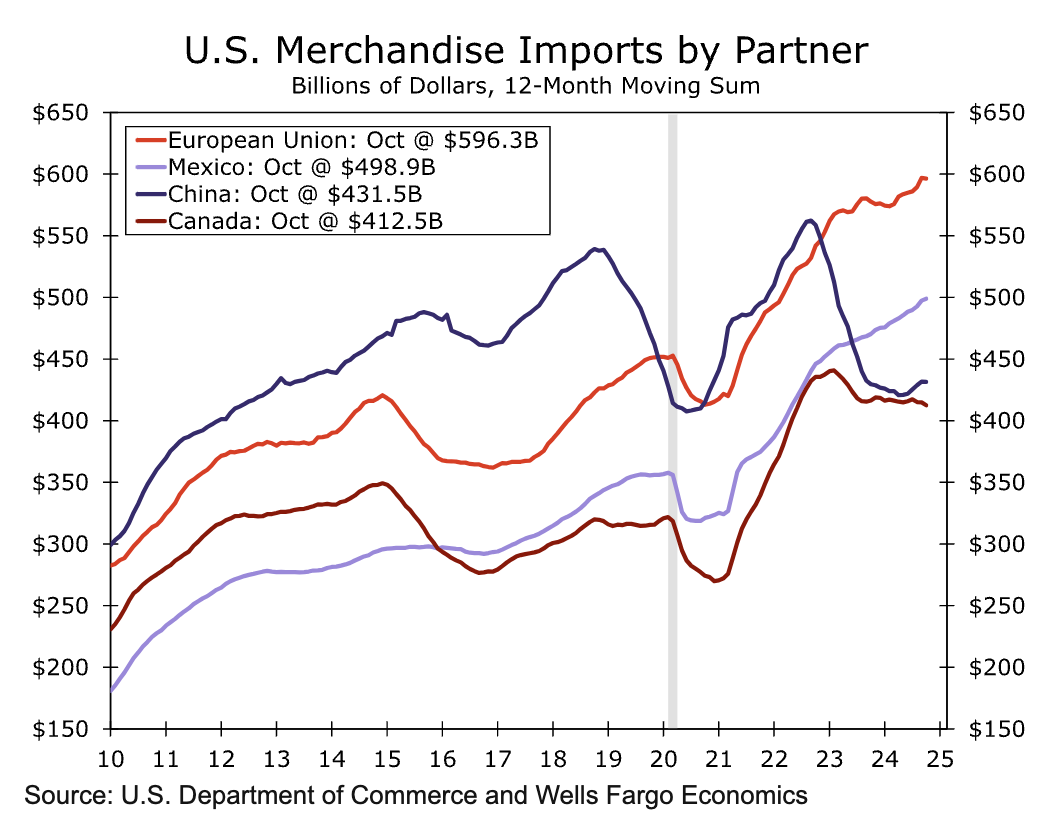
Whilst the EU and Mexico is showing progress, remember many of the Mexican imports to the US are of Chinese origin. Professor Jin states “with the possible exception of India, no country will ever emerge to match China’s impact on the global economy.” For the world, understanding China is essential. For Xi Jinping, China’s rise is not just a political goal but a fulfillment of historical destiny, where the contradictions of global capitalism will be resolved in China’s favor, ‘leading to the nation’s rightful place as a global leader in a new world order’.
The China model’s impact on global economic governance is profound, reshaping international trade and investment norms. For instance, China’s Belt and Road Initiative exemplifies how its economic strategies influence global infrastructure development, creating both opportunities and dependencies. Critics in Western nations caution against the model’s long-term sustainability, highlighting risks of debt traps and geopolitical friction. Nevertheless, foreign capital investment by China-based companies reached $162.7bn in 2023.
As nations grapple with the complexities of interdependence and rivalry, a more informed dialogue is imperative.
Values
It is noteworthy that according to The World Values Survey, which examines beliefs and values across more than one hundred countries, reveals that 93 percent of Chinese respondents prioritize security over freedom, in contrast to just 28 percent of American respondents. Additionally the latest World Values Survey indicates that 95 percent of Chinese participants had significant confidence in their government, compared to 33 percent in the US and 45 percent, on average, in the rest of the world.As of 2022, that level of trust was at 91 percent, compared to 39 percent in the US. These differences can only be fully comprehended by considering cultural and historical contexts.
The Paradox Persists
China’s economic miracle is a bag of contradictions, a state-guided market economy, a centralized yet decentralized polity, a nation rooted in tradition yet propelled by innovation. For instance, the coexistence, and competition, of major state-owned enterprises and private firms demonstrates the delicate balance of competition and control, while localized governance structures like those in Shenzhen showcase the adaptability of regional leadership. Its playbook possibly defies replication yet offers lessons in adaptability, pragmatism, and the art of balancing competing imperatives.
In 2025, as China builds its position in an uncertain world, it will likely take center place in any peace negotiations in Ukraine, Syria, Sudan and other ‘hot points’ following Xi Jinping's bold calls for China to “lead in the reform of the global governance system,” and certainly in global economic affairs. It forces us to reexamine the interplay among geopolitical matters, economic models and cultural heritage, challenging our preconceived Western notions.
Overall. I certainly believe that countries need to become more self-sufficient and resourceful… and that will require taking a much closer look at how China is becoming close to achieving this.
Stay curious
Colin
Recommended reading:
The New China Playbook: Beyond Socialism and Capitalism. By Keyu Jin
The Great Transformation: China’s Road from Revolution to Reform. By Odd Arne Westad and Chen Jian
Deng Xiaoping and the Transformation of China. By Ezra F. Vogel
The World According to China. By Elizabeth C. Economy
Empress Dowager Cixi: The Concubine Who Launched Modern China. By Jung Chang
Recommended video – any talk by Professor Keyu Jin. Such as this one, this one, or this one
…and this one: How Will China Retaliate Against Trump Tariffs? China Has Been ‘Preparing’ | Keyu Jin
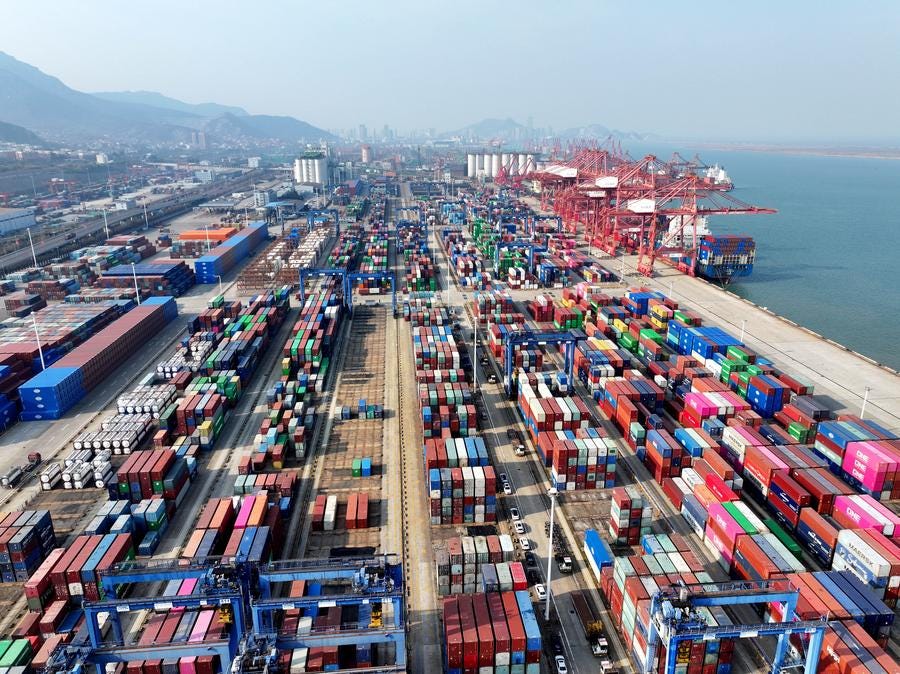
Image credit - Aerial drone photo taken on Dec. 10, 2024 shows a container terminal of Lianyungang Port, east China's Jiangsu Province. (Photo by Wang Chun/Xinhua)
Another excellent post. I have been looking for a book about China for the last few weeks. If I had to read one of the five books you mentioned, which would you recommend?
My thoughts below are based on personal readings and observations as a non-economist. The key question remains: Can China sustain its growth and navigate the challenges ahead?
Here are some critical considerations:
Challenges and Uncertainties:
1. Building Robust Internal Demand: China’s economy relies heavily on exports, making it vulnerable to global economic fluctuations. It must develop a stronger and more sustainable internal demand for goods and services to ensure long-term stability.
2. Demographic Crisis: China's population is projected to decline significantly, potentially reaching 1.313 billion by 2050 and falling below 800 million by 2100. This isn’t just about workforce concerns, which automation can address, but also about sustaining internal consumption. A shrinking population poses risks to domestic demand, economic growth, and social stability.
3. Aging Population: By mid-century, an estimated 26% will be 65 or older, reducing consumption and increasing the financial burden on healthcare and pension systems.
4. Trust on the Global Stage: Can China build and maintain trust with other nations? Trust is essential for trade, foreign investments, and long-term partnerships.
5. Competing Economies in Asia: Countries like India, Vietnam, Thailand, and Indonesia are building their economies and infrastructure, challenging China’s dominance in manufacturing and exports.
6. Economic Transformation: How has China transitioned from a state-driven to a more industry-driven economy? More importantly, can this transformation continue sustainably?
7. Political System Evolution: Will China remain a unitary communist state or eventually transition to a more democratic society as its economy and global influence expand? This question also affects how the rest of the world perceives China.
8. Opening Up to Foreign Competition: Can China further open its economy to foreign competition, or will it prioritize protectionist policies to safeguard its industries?
9. Alliances with Key Nations: As global geopolitics evolve, what will happen to its alliances with countries like Russia, Iran, and North Korea? These relationships could have long-term implications for its economic and political strategy.
10. Addressing Current Crises: In the short to mid-term, China faces significant challenges, including slowing growth, an aging population, the real estate/debt crisis, and currency manipulation. How it handles these issues will shape its trajectory.
11. Relations with Neighbors: Building positive and stable relationships with neighboring countries, particularly in the South and East, will ensure long-term growth and regional stability.
12. Attracting Global Talent: Can China attract top global talent like the US? Alternatively, can it convince the talented Chinese diaspora to return and contribute to its growth? This will be critical for innovation and technological advancement.
13. Advancing Technology: How quickly can China move to the next level of developing advanced technologies, such as semiconductors? While progress has been made in recent years, this remains a key area of focus, especially in light of Western restrictions on tech exports.
14. Role of Rare Minerals: Rare minerals, crucial for the global economy, is a significant aspect of China’s strategic play. How China leverages its dominance in this space will influence its role in international trade and politics.
15. Military and Political Goals: What are China’s long-term military and political ambitions? While Taiwan is often in focus, does its strategy go beyond regional dominance to establishing global influence?
16. Western Strategies and China's Response: How will Western tariffs, sanctions, and restrictions impact China in the short term? How will China respond to these challenges while maintaining its growth momentum?
17. Urban-Rural Divide: Based on my reading, it seems China still struggles with a significant urban-rural divide despite its success in urbanization. Rural areas often lack access to quality healthcare, education, and infrastructure, limiting economic growth and social cohesion. Bridging this gap is essential for creating a more balanced and inclusive economy.
18. Digital Surveillance and Control: China’s extensive use of digital surveillance and social control mechanisms (e.g., the Social Credit System) have implications for citizens' freedom and innovation. Can China maintain this authoritarian model while fostering innovation?
Positive Factors Supporting China’s Growth:
1. Remarkable Economic Growth: Over the past 40 years, China has demonstrated phenomenal economic growth, lifting hundreds of millions out of poverty and transforming into the world’s second-largest economy.
2. Manufacturing Powerhouse: China's manufacturing capabilities are unparalleled and will remain difficult for other nations to replicate in the near term. As long as it retains its position as the world’s manufacturing hub, it will likely sustain better GDP growth than most developed economies.
3. Leadership in Emerging Technologies: China is a global leader in sectors like electric vehicles (EVs), solar energy, artificial intelligence (AI), and robotics, though the US is strongly competing in AI and seems to be ahead so far.
4. Motivated Youth: China's younger generation is highly driven and, at least for now, appears patriotic and optimistic about the country’s future—an essential factor for sustained growth.
5. Rapid Rise to Superpower Status: Becoming a global superpower in such a short time is a truly remarkable achievement. Few nations have ever scaled their global influence as rapidly as China.
6. World-Class Universities: China's universities now rival top Western institutions and produce scientists and engineers in more significant numbers than any other country. This ensures a steady supply of talent to drive future innovation and development.
China’s recent history of rapid growth and technological advancement is extraordinary. However, its future hinges on how it addresses the complex interplay of demographic, economic, political, and global challenges. The balance between maintaining internal stability and navigating external pressures will define whether it can sustain its position as a global superpower in the decades to come.
I've studied international economics and chinese politics, and have spent about 2 years in China. I think that the general advice of "whatever you think about China, think again" is probably valid for both critics and supporters.
The critics decry, and supporters ignore, the fact that an enormous amount of Chinese growth is fueled by unsustainable debt and a slowly collapsing property bubble. But to respond to the critics, that doesn't mean it isn't real growth. It makes me want to turn on the head the Keynes quote that "the market can stay irrational longer than you can stay solvent" and posit that perhaps "the Chinese market can stay irrational longer than China can stay undeveloped". Someday (perhaps ongoing today) investors will realize the unsustainable nature of the Chinese economy and pull out, perhaps the international elements of the economy will shrivel. But the development will persist, if you see my meaning? The factories, the supply chains, the infrastructure, the human capital, the universities are there and they aren't going anywhere anytime soon. It's an idea I attempted to articulate in a post here (https://whitherthewest.com/2024/04/23/chinas-coral-reef-economy/) but I had trouble finding the words then for what I've said here: GDP and formal economy ebbs and flows, intangible development will remain.