
Creative Tension
The necessary friction of making things that matter

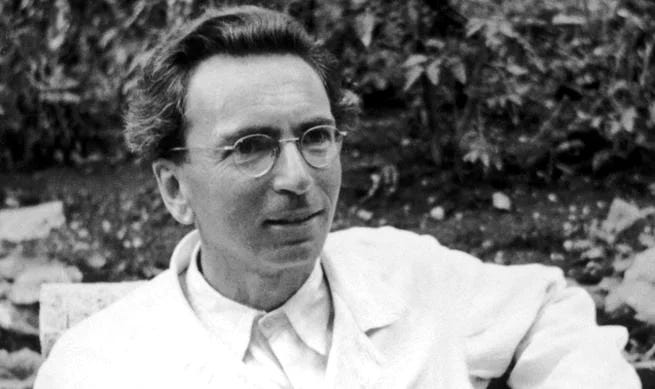
“What man actually needs is not a tensionless state but rather the striving and struggling for some goal worthy of him.” ~ Viktor Frankl
In 2004 the highly respected brand marketing advisor, Wally Olins, was hired to create a brand for Poland. Branding a country is never easy, but after in an depth study of Poland and the Polish people, Olins and his team coined a phrase: “creative tension”. I wrote about this in 2008, a tad critically. But on reflection I came to believe that Olins was right. Here is how he described part of the reasoning:
“Polish people are passionate and idealistic and also practical and resourceful; the Polish character is ambitious and also down to earth.
These tensions create a restlessness unsatisfied with the status quo, and a boisterousness that is always stimulating and often astonishing. This creative tension is why Poland produces so many entrepreneurs, artists and sportspeople. It’s why Poland is constantly changing and evolving... And it’s why Poles have always tried to achieve the seemingly impossible – and often succeeded.”
Personal Creativity
While Olins was describing a national character, he accidentally provided a perfect definition for the creative process. You already know what creativity feels like. You have felt it in the small irritation when something almost works and somehow does not. A sentence that lands but does not stay. An idea that solves the problem while quietly breaking something else. Creativity begins there, not as inspiration, but as friction.
I believe the mistake we make is to treat creativity as a personality trait rather than an activity. We speak as if some people have it and others do not, as if it were handed out unevenly and then sealed. My experience has been the opposite. Creativity shows up when someone stays with a question longer than etiquette recommends. When they refuse the first adequate answer, even though everyone else in the room has already moved on.
An Interruption
This is why creativity is rarely comfortable. It asks you to delay closure. To remain slightly dissatisfied. Most systems are designed to reward resolution. Creativity interrupts that reward cycle. It insists that the thing declared finished is merely finished enough. That insistence has a cost. You look slow. You look difficult. Occasionally, you look foolish.
Creativity is not about producing novelty. Novelty is easy. You can generate endless variation by accident or automation. What matters is selection. Creativity is the act of choosing one possibility over many without being able to fully justify that choice in advance. It is judgment exercised under uncertainty.
I notice this every time I work seriously on anything that matters. Discarding ideas without resentment turns out to be harder than it sounds, because we quietly confuse our ideas with our worth. To let an idea go feels, at first, like a small personal demotion. Learning to separate judgment from identity is part of the work. Most ideas arrive quickly, and many of them disappoint. The work is not in producing them, but in letting them go without turning the rejection inward. This is where creativity begins to resemble character. Not virtue, exactly, but temperament. The ability to keep deciding without guarantees.
Man’s Search For Meaning
This is where Viktor Frankl becomes unexpectedly useful.
Frankl writes that mental health requires
“a certain degree of tension, the tension between what one has already achieved and what one still ought to accomplish.”
Frankl argued, against the therapeutic fashions of his time, that human beings do not flourish in comfort or equilibrium. They flourish in tension. Not pathological tension, not panic or despair, but the specific strain between where one stands and what one feels called to bring into being. He believed mental health depended on this stretch, and that removing it did not heal people but hollowed them out.
He called this “noö-dynamics.” It is the act of holding the gap between “what is” and “what ought to be.” To Frankl, this was not a state to be cured, but the very engine of potential. Seeking a tensionless state is not health; it is stagnation. Meaning is not something we find in a state of rest. It is something we generate by moving toward a task that demands something of us.
What Frankl understood, and what we tend to forget, is that meaning does not arrive through resolution. It arrives through direction. A life organized around relief becomes small very quickly. A life organized around a task grows. The task does not have to be grand. It only has to matter enough to pull you forward. Tension, in this sense, is not the enemy of meaning. It is its engine.
Responsibility
I recognize this pattern every time creative work becomes real. Earlier, I spoke about discarding bad ideas. Frankl’s language sharpens that experience. What is being tested in those moments is not taste alone, but responsibility to what still ought to be accomplished. The tension persists because the task has not yet been met. The discomfort is not a signal to stop. It is evidence that the work has crossed from repetition into responsibility. Something is now being asked of me that cannot be solved by habit alone. Frankl would say this is precisely the moment when meaning becomes available, not because the tension disappears, but because I choose to stand inside it rather than flee.
Seen this way, creativity is not self-expression in the therapeutic sense. It is self-transcendence. The work pulls attention away from the self and toward the unfinished thing that needs care. This is why creative tension feels humane rather than mechanical. It binds effort to purpose. It links strain to dignity.
Boundaries
Rules are important as pressure. A strong form creates resistance. Resistance sharpens attention. Constraint does not limit creativity; it gives it something to push against. Absolute freedom produces silence. Boundaries produce movement.
This tension has a political edge. By refusing to accept the first adequate answer, the creator challenges the idea that the current state of things is final. Every act of creation reopens the question of who decides when something is good enough. That question is unsettling because it does not stay confined to art. It leaks into how we view systems, norms, and authority.
This is also why creativity cannot be reduced to automation. Systems can generate possibilities at scale, but they cannot stand behind a choice. Standing behind a choice is a human act of courage. It involves the willingness to look foolish, to be wrong in public, to accept that judgment will arrive before justification. A machine cannot feel that exposure, and so its selections carry no weight. Creativity involves responsibility. Someone has to own the choice. Someone has to say: this, not that.
If there is a lesson worth your time, it is this. Creativity asks us to remain exposed to judgment and failure in the service of something unfinished. That exposure is the price of keeping tension alive long enough for meaning to take shape. Creativity is not a lightning strike. It is a practiced willingness to remain exposed longer than is comfortable. To keep choosing without certainty. To accept that the future stays open only because someone, somewhere, refuses to close it too quickly.
Stay curious
Colin
"evolution is a chain of constraints"
Ahhhh the lemming rush to judgement, the rush to be first with the answer, the insane rush to be seen as clever, the know-it-all, the chocolate smartie, the oracle.
Me first generation, me me me...the clamouring memes of modern life.
The tinnitus of the constant blaring digital age.
The rising tide of poor and rushed decisionitus...
The safe and familiar uniformity of what is called living...
I am guilty as charged...
Thank you for a such a thoughtful piece...